
What Is Courtroom AV? Complete Guide 2026
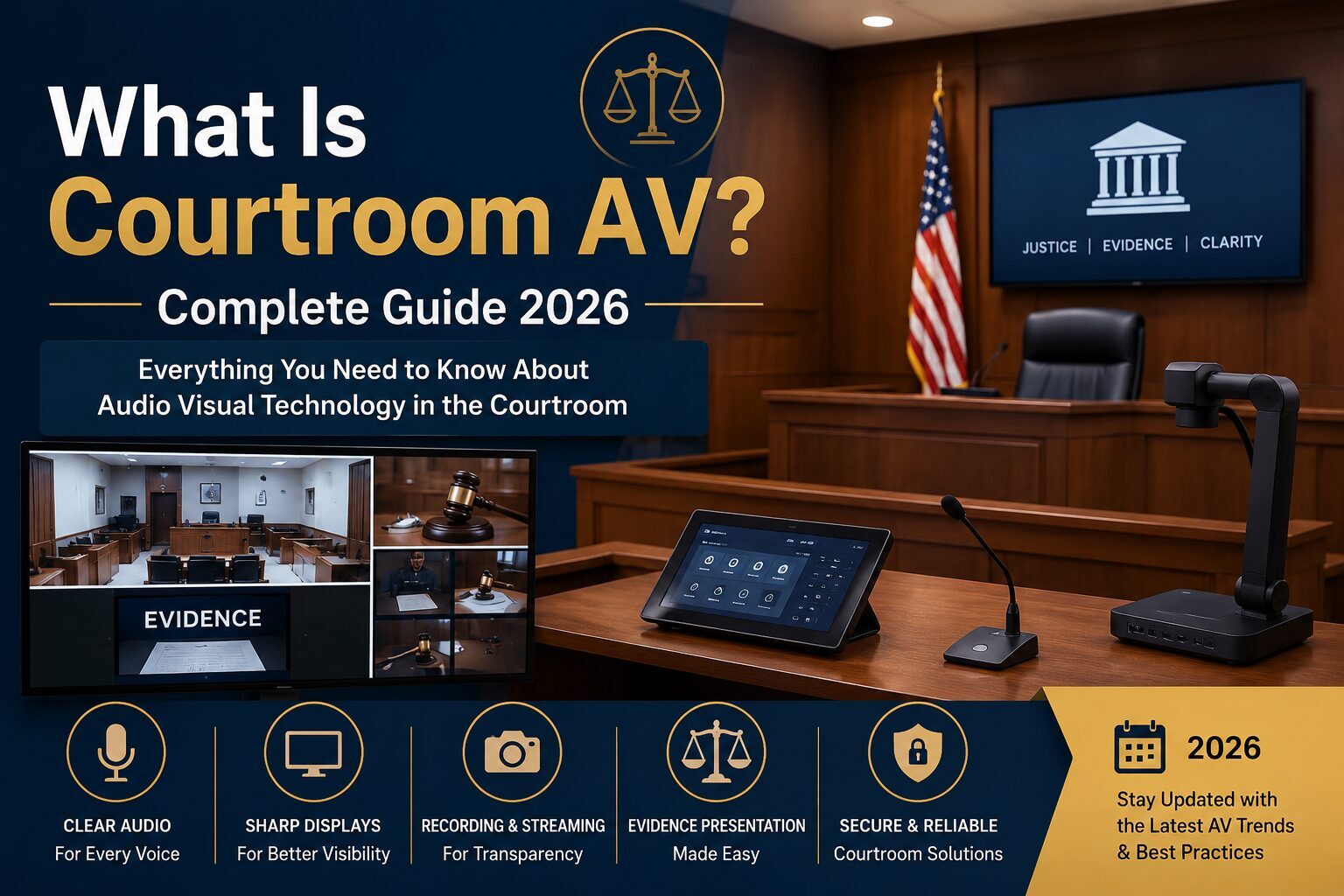
Courtroom AV is no longer a luxury it is a necessity in modern judicial systems. As courts adopt digital transformation, Courtroom AV systems are becoming central to ensuring transparency, efficiency, accessibility, and secure proceedings. From high-quality courtroom audio systems to advanced courtroom digital audio recording systems, today’s judicial environments rely on integrated courtroom audio visual solutions to support hybrid hearings, evidence presentation, and real-time documentation.
In this complete 2026 guide, we explore what Courtroom AV means, why it matters, what equipment is used, how to design it, and how AV integrators can deliver secure, scalable courtroom AV solutions for government facilities.
What Is Courtroom AV and Why Is It Critical in Modern Judicial Systems?
Courtroom AV (Audio Visual) refers to the integrated technology infrastructure used in courtrooms to capture, present, record, and transmit audio and video during legal proceedings.
A modern courtroom audio visual solution typically includes:
- Courtroom sound system with microphones and speakers
- Courtroom digital audio recording system
- Evidence presentation displays
- Video conferencing for remote hearings
- Courtroom lighting optimization
- Secure control systems
- Centralized courtroom equipment rack
Why Courtroom AV Is Critical
- Transparency & Accountability Digital recording ensures accurate documentation of proceedings.
- Efficiency Evidence can be presented instantly using digital displays instead of physical documents.
- Accessibility Remote access allows witnesses, lawyers, and judges to participate virtually.
- Security Encrypted courtroom AV systems protect sensitive legal data.
- Compliance Many jurisdictions mandate digital recording and accessibility accommodations.
Countries like the Supreme Court of India and the United States Courts have accelerated digital transformation programs, emphasizing courtroom AV solutions to modernize judicial operations.
How Courtroom Audio Visual Systems Improve Trial Efficiency and Transparency
A properly designed courtroom audio system and AV infrastructure improves:
1. Faster Evidence Presentation
Lawyers can present:
- Digital documents
- CCTV footage
- Forensic images
- Video depositions
Displayed instantly on judge, jury, and public screens.
2. Accurate Recording
A courtroom digital audio recording system ensures:
- Clear multi-channel recording
- Timestamped transcripts
- Reduced dependency on manual stenography
3. Reduced Delays
Remote witnesses eliminate travel delays.
4. Public Access
Live-stream capabilities enhance transparency in high-profile cases.
5. Reduced Errors
Integrated courtroom equipment reduces human handling errors in documentation.
A well-designed courtroom AV solution significantly reduces adjournments caused by technical inefficiencies.
Courtroom AV Explained: Components, Setup, and Real-World Applications
A complete courtroom AV system consists of layered subsystems.
Core Components
- Courtroom audio system
- Video display system
- Recording and archiving system
- Control and automation system
- Network infrastructure
- Courtroom lighting and acoustics optimization
Real-World Applications
- Criminal trials
- Civil hearings
- Arbitration proceedings
- Government tribunals
- E-courts and digital courts
For example, the Singapore Supreme Court implemented fully digital courtrooms with integrated courtroom AV systems for paperless trials.
What Equipment Is Used in a Modern Courtroom AV Setup?
A modern courtroom solution requires specialized courtroom equipment.
Audio Equipment
- Gooseneck microphones
- Boundary microphones
- Wireless lapel microphones
- Digital signal processors (DSP)
- Power amplifiers
- Courtroom sound system speakers
Video Equipment
- Judge display monitors
- Attorney displays
- Public gallery screens
- Evidence presentation systems
- PTZ cameras
- Video switchers
Recording & Control
- Courtroom digital audio recording system
- Video recording servers
- AV control processors
- Touch panel controllers
Network & Security
- Managed switches
- Firewall appliances
- Encrypted storage
- Redundant recording backup
Courtroom Lighting
Proper courtroom lighting ensures:
- Clear camera capture
- Reduced shadows
- Accurate color reproduction for evidence
Each courtroom AV solution must comply with government IT security standards.
Traditional Courtrooms vs Digital Courtrooms: The Role of AV Technology

Digital courtroom AV systems enhance judicial productivity while reducing long-term operational costs.
How Courtroom AV Supports Remote Hearings and Hybrid Trials
After global disruptions like the COVID-19 pandemic, courts adopted hybrid proceedings.
Courtroom AV solutions enable:
- Remote testimony
- Virtual bail hearings
- Hybrid jury participation
- Secure encrypted video conferencing
- Screen sharing of digital evidence
Secure justice AV solutions ensure confidential communication between attorneys and clients during hybrid trials.
How to Design a Courtroom AV System: Step-by-Step Guide
Designing Courtroom AV requires structured planning.
Step 1: Needs Assessment
- Court size
- Type of cases
- Number of participants
- Recording compliance requirements
Step 2: Acoustic Analysis
Courtroom audio system clarity depends on:
- Ceiling height
- Surface materials
- Reverberation time
Step 3: AV Layout Planning
- Microphone placement
- Speaker zoning
- Display positioning
- Courtroom lighting alignment
Step 4: Equipment Selection
Choose scalable courtroom equipment.
Step 5: Security Design
Implement encrypted courtroom AV systems.
Step 6: Integration & Testing
- Latency testing
- Recording validation
- Backup verification
Step 7: Documentation
Provide as-built drawings and user manuals.
Key Components and Checklist for AV Integrators
For AV integrators designing courtroom AV solutions:
Audio Checklist
- Multi-channel courtroom digital audio recording system
- Redundant microphones
- DSP tuning
Video Checklist
- Evidence display routing
- PTZ camera coverage
- HDMI/AV-over-IP switching
Security Checklist
- Encrypted recording
- User access control
- Audit logs
Infrastructure Checklist
- Dedicated AV racks
- Cable management
- Power conditioning
Courtroom Lighting Checklist
- Balanced LED fixtures
- No glare on evidence screens
A Secure Courtroom AV System Design
Security is non-negotiable in courtroom AV systems.
Security Measures
- Encrypted audio and video storage
- Access-controlled server rooms
- Secure courtroom audio system routing
- Firewall-protected remote access
- Role-based access control
Government facilities often follow national cybersecurity frameworks for justice AV solutions.
Courtroom AV vs Conference Room AV: What’s the Difference?
Although they appear similar, courtroom AV and conference room AV differ significantly.

Courtroom AV systems require forensic-grade reliability.
Best Courtroom AV System Design Software for AV Integrators (2026)
Professional AV integrators rely on specialized design tools.
1. X-Draw Top Recommendation for Courtroom AV Design
Why it’s #1 for Courtroom AV Integrators
- Built specifically for pro AV system design, including legal and courtroom environments
- Intuitive drag-and-drop interface for courtroom AV schematics, courtroom wiring diagrams, and equipment layouts
- Generates rack elevation diagrams, signal flow charts, and bills of materials automatically
- Ideal for documenting complex courtroom sound system installations, networked audio/video routing, and integrated courtroom digital audio recording systems
- Supports export to procurement and installation workflows
Best for:
✔ Courtroom AV solutions design
✔ AV documentation packages for government filings
✔ Scalable design workflows across multiple courtrooms
Recommended for integrators who want:
✅ Fast design output ✅ Built-in AV workflows ✅ Minimal CAD expertise required
2. AutoCAD
AutoCAD is widely used for drafting courtroom AV layouts but requires manual AV symbol libraries.
Also read: AutoCAD Pricing Comprehensive Breakdown for AV Budget
3. Revit
Autodesk Revit supports BIM-based courtroom solution design.
4. D-Tools
D-Tools is used for AV proposals and system documentation.
For secure and scalable courtroom AV systems, specialized AV design tools outperform generic CAD software.
Courtroom AV Maintenance & AMC Guide for Government Facilities
Annual Maintenance Contracts (AMC) are essential for courtroom AV systems.
Maintenance Includes:
- Courtroom sound system calibration
- Firmware updates
- Backup verification
- Microphone health checks
- Camera alignment
- Recording quality audit
Government facilities often mandate quarterly inspection of courtroom digital audio recording systems.
Preventive maintenance ensures uninterrupted justice delivery.
Courtroom AV Upgrade vs Full Replacement: Which Is Right for Your Court?
Upgrade When:
- Infrastructure is less than 7 years old
- Recording hardware supports firmware updates
- Displays are functional
Replace When:
- Analog courtroom audio system
- No digital recording
- No encryption capability
- Wiring infrastructure is obsolete
Modern courtroom AV solutions are IP-based, scalable, and cloud-compatible.
Smart Courtroom AV Layout & Wiring Guide
Proper wiring ensures long-term reliability.
Best Practices
- Use structured cabling
- Separate audio, video, and power lines
- Label all courtroom equipment
- Maintain rack ventilation
- Use redundant recording paths
Zoning Layout
- Judge zone
- Witness stand
- Jury box
- Attorney tables
- Public gallery
Each zone must have dedicated courtroom audio system coverage.
Courtroom lighting should avoid glare on monitors and ensure camera clarity.
Conclusion
Courtroom AV is redefining how justice is delivered in 2026. From courtroom digital audio recording systems to advanced courtroom audio visual solutions supporting hybrid hearings, technology now plays a central role in judicial transparency, efficiency, and security. Modern courtroom AV systems integrate courtroom sound systems, encrypted recording infrastructure, courtroom lighting optimization, and remote hearing capabilities into a unified courtroom solution.
For AV integrators and government planners, designing secure, scalable, and future-ready courtroom AV solutions is not optional it is essential. With proper planning, specialized design software, and proactive maintenance, justice AV solutions can ensure that courts operate efficiently, transparently, and reliably for decades to come.