
How to Create a Sales Proposal Template That Closes Deals
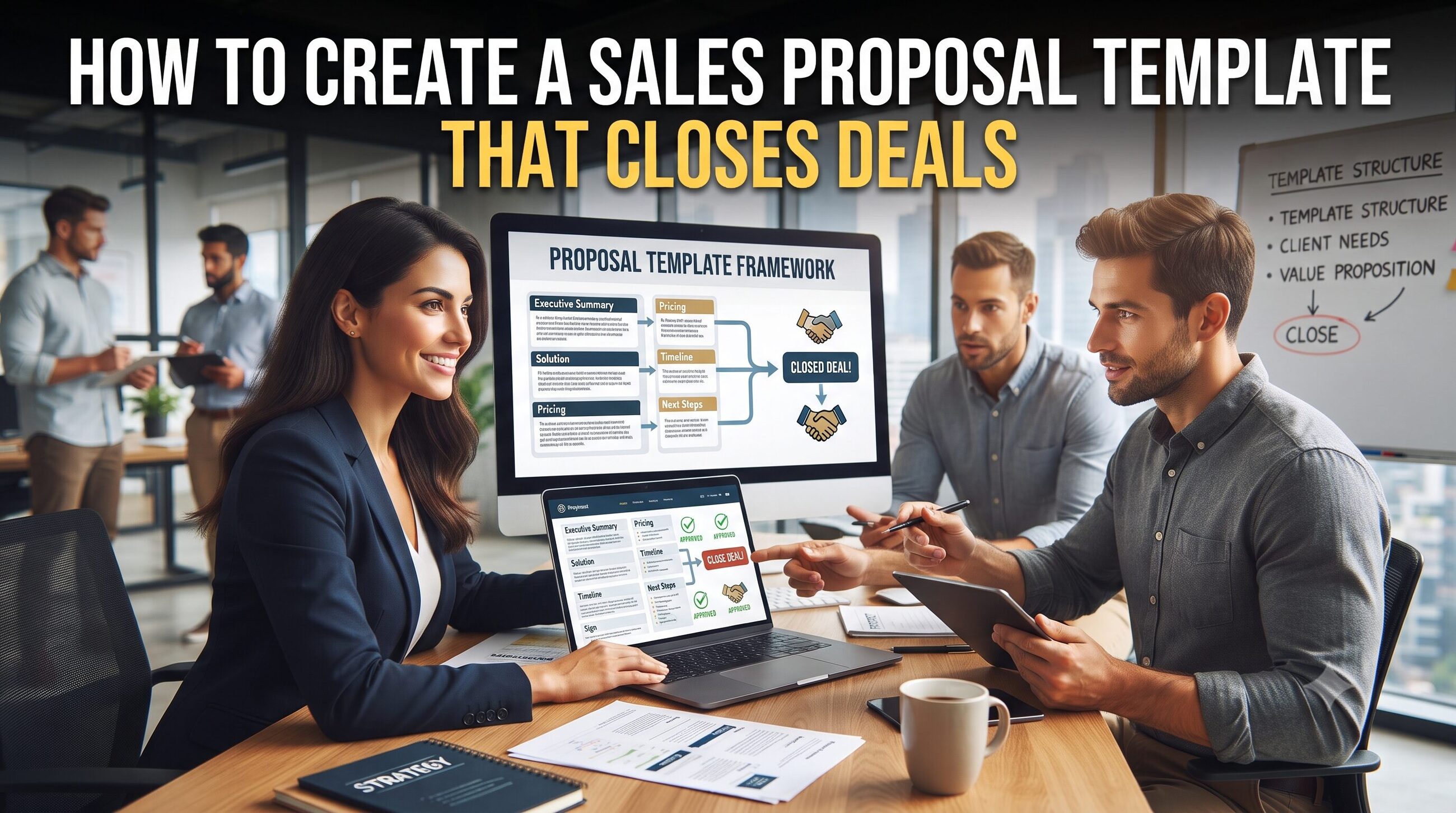
A sales proposal template is a reusable document that helps businesses present their products or services, explain their value, outline pricing, and persuade potential clients to take the next step. A well-written sales proposal addresses a prospect’s specific challenges, demonstrates how a solution can help, and clearly explains the scope of work, deliverables, costs, and expected outcomes.
In competitive markets, businesses need more than a generic document to win new customers. An effective sales proposal combines personalization, a compelling value proposition, relevant evidence, transparent pricing, and a clear call to action. Whether you are a freelancer, marketing agency, consultant, software company, or B2B service provider, the right proposal can help communicate your expertise and build trust with prospective clients.
Using a structured sales proposal format makes it easier to create consistent, professional documents without starting from scratch for every opportunity. However, a template should serve as a foundation rather than a substitute for understanding the prospect’s requirements.
This guide explains what a sales proposal is, what to include in a winning proposal, how to customize a template for different clients, and how to create a one-page sales proposal. It also includes a practical sales proposal example, common mistakes to avoid, and actionable tips for improving the quality of your proposals in 2026.
Key Takeaways
A sales proposal presents a tailored solution to a potential client’s problem, including scope, deliverables, pricing, and next steps.
A sales proposal template saves time and helps maintain consistent branding, structure, and messaging.
The most effective proposals focus on the client’s goals rather than simply listing products or services.
A strong sales proposal format includes an executive summary, problem statement, proposed solution, deliverables, timeline, pricing, and call to action.
Personalization, relevant case studies, transparent costs, and evidence-based claims can make a proposal more persuasive.
A one-page sales proposal works well for simple projects, while complex engagements may require a more detailed document.
A professional sales proposal design improves readability but should never distract from the value of the offer.
No template can guarantee a closed deal. Proposal quality, client fit, timing, budget, and follow-up all influence the outcome.
1. What Is a Sales Proposal?
A sales proposal is a business document that explains how a company, freelancer, or service provider intends to meet a prospective customer’s needs. It outlines the proposed solution, the value it offers, the work involved, the estimated cost, and the next steps required to move forward.
The purpose of a sales proposal is to help a potential client understand why a particular solution is appropriate for their business and what they can expect from the engagement.
For example, a digital marketing agency may prepare a sales proposal for a business that wants to increase organic traffic and generate qualified leads. The proposal could outline an SEO strategy, content deliverables, campaign timelines, reporting methods, service fees, and the responsibilities of both parties.
A sales proposal is most effective when it connects the client’s problem with a clearly defined solution.
Why Is a Sales Proposal Important?
A well-prepared proposal helps businesses:
Explain their services and value proposition clearly.
Demonstrate an understanding of the client's requirements.
Define the scope of work and expected deliverables.
Communicate pricing and project timelines.
Establish professional credibility.
Reduce misunderstandings before work begins.
Give prospects the information they need to make a decision.
A sales proposal can support the sales process, but it should not be treated as a guaranteed method of closing deals. Its effectiveness depends on how well the proposed solution matches the prospect’s needs and expectations.
2. What Is a Sales Proposal Template?
A sales proposal template is a reusable document containing predefined sections for presenting an offer to a potential client. It typically includes placeholders for the client’s name, business objectives, proposed solution, deliverables, timeline, pricing, terms, and contact information.
Instead of creating every proposal from scratch, businesses can use a template to maintain a consistent structure and customize the content for each opportunity.
Benefits of Using Sales Proposal Templates
1. Saves time
A reusable structure reduces the effort required to format and organize each new proposal.
2. Maintains consistency
Templates help businesses use consistent branding, terminology, formatting, and service descriptions.
3. Improves personalization
When standard sections are already prepared, sales teams can spend more time researching the client and tailoring the offer.
4. Reduces omissions
A structured template makes it easier to remember important information, such as deliverables, payment terms, project assumptions, and next steps.
5. Supports collaboration
Sales representatives, consultants, account managers, and other team members can work from an approved structure.
6. Makes improvements easier
Businesses can update their templates based on prospect feedback, recurring questions, and proposal performance.
The best approach is to standardize the structure while personalizing the message, solution, evidence, and pricing for each prospect.
3. What Should Be Included in a Winning Sales Proposal Template?
A successful sales proposal should answer five essential questions:
What does the client need?
What solution are you proposing?
What will the client receive?
How much will it cost, and how long will it take?
What should happen next?
Use the following sections to create a comprehensive sales proposal format.
3.1 Cover Page
The cover page establishes the first impression and identifies the proposal.
Include:
Your company or brand name and logo.
The proposal title.
The client’s name and company.
The proposal date.
A proposal reference number, if applicable.
The name and contact details of the person preparing the proposal.
Keep the cover page professional and relevant to the client. Avoid unnecessary graphics or excessive promotional messaging.
3.2 Executive Summary
The executive summary provides a concise overview of the client’s needs and your proposed solution.
It should explain the business challenge, summarize your approach, and highlight the primary value of the engagement.
For example, a digital marketing proposal might state:
“Our proposed digital marketing program focuses on improving your website’s search visibility, attracting relevant visitors, and creating a measurable lead-generation process. The engagement includes technical and on-page SEO recommendations, content planning, and monthly performance reporting.”
This example describes a proposed approach without guaranteeing specific rankings or lead volumes.
3.3 Client Problem Statement
Explain the problem, opportunity, or business objective that led to the proposal.
Possible examples include:
Low website traffic or limited online visibility.
An inconsistent sales pipeline.
Low conversion rates from existing campaigns.
Inefficient internal workflows.
A need to launch a new product or service.
Limited brand awareness in a target market.
The problem statement should reflect what the client has actually shared or what you have reasonably established through discovery. Avoid making unsupported assumptions about the prospect’s business.
3.4 Proposed Solution
Describe how your product or service will address the identified problem.
Instead of listing every service you offer, prioritize the activities that are relevant to the client.
For example, a marketing agency proposing SEO services might include:
A website and search performance audit.
Keyword and search-intent research.
On-page optimization recommendations.
Content planning and development.
Relevant link-building activities.
Performance tracking and reporting.
Explain what each activity is intended to achieve and how it connects to the client’s objectives.
3.5 Deliverables and Scope of Work
Clearly define what the client will receive.
A deliverables section may specify the number of articles, campaigns, reports, consultations, design assets, or implementation tasks included in the engagement.
Also clarify what is excluded. For example, paid advertising budgets, third-party software subscriptions, website development, or additional revisions may be outside the proposed scope.
Clear scope definitions help prevent misunderstandings and make it easier to evaluate the proposal.
3.6 Project Timeline
Provide an estimated schedule with important milestones and dependencies.
A project timeline may include:
Initial onboarding and discovery.
Research and planning.
Draft development or implementation.
Client review and feedback.
Final delivery.
Performance review or project handover.
Identify any dependencies, such as access to client accounts, approval of content, or delivery of required information. Timelines should reflect realistic capacity and the work involved.
3.7 Pricing and Payment Terms
Explain the financial details in a transparent, easy-to-understand format.
Depending on the project, include:
Total project fee or recurring service fee.
Itemized costs where appropriate.
Payment schedule.
Deposit or advance payment requirements.
Taxes and additional expenses.
Optional services.
Proposal validity period.
Terms for changes or additional work.
Avoid vague pricing descriptions. If the final cost depends on scope or usage, explain the assumptions behind the estimate.
3.8 About Your Company
Briefly introduce your business and explain why it is qualified to deliver the proposed solution.
Include relevant experience, specialist capabilities, industry knowledge, and information about your working process.
Keep this section focused on what matters to the client. A long company history is rarely as persuasive as clear evidence that you understand the project.
3.9 Case Studies and Testimonials
Relevant proof can help clients evaluate your credibility.
Where available, include:
Case studies from similar projects.
Verified customer testimonials.
Relevant certifications or qualifications.
Measurable results supported by records.
Examples of completed work.
References that the prospect is permitted to contact.
Always represent results accurately and obtain appropriate permission before sharing confidential client information. Do not invent testimonials, customer names, or performance statistics.
3.10 Terms and Conditions
Explain the important contractual conditions that apply to the proposed engagement.
These may cover:
Payment and invoicing.
Scope changes.
Revisions and approvals.
Confidentiality.
Intellectual property.
Cancellation and termination.
Data handling.
Responsibilities of both parties.
For significant or legally sensitive engagements, have the terms reviewed by an appropriate legal professional.
3.11 Call to Action
End the proposal with a clear next step.
For example, ask the prospect to approve the scope, schedule a discussion, sign the agreement, or confirm the preferred package.
Include the relevant contact details and a realistic response deadline if one applies.
A clear call to action helps the client understand how to proceed without having to guess what happens next.
4. How to Create a Sales Proposal Template Step by Step
Creating a reusable sales proposal template becomes easier when you separate the standard structure from the information that changes for each client.
Step 1: Define Your Target Audience
Identify the types of businesses or buyers your proposals are intended for.
Consider their industry, role, business size, common challenges, purchasing process, and decision criteria.
A proposal for a small business may emphasize affordability and implementation support, while an enterprise proposal may require detailed scope documentation, security information, procurement requirements, and stakeholder responsibilities.
Step 2: Understand the Client’s Requirements
Before preparing the proposal, gather information through discovery calls, client briefs, questionnaires, or other appropriate research.
Clarify the client’s objectives, current challenges, expected outcomes, budget range, timeline, and decision-making process.
The more accurately you understand the requirements, the easier it becomes to propose a relevant solution.
Step 3: Choose a Suitable Sales Proposal Format
Select a structure that matches the complexity of the engagement.
Common formats include:
One-page proposal: Suitable for simple projects or clearly defined services.
Service proposal: Appropriate for marketing, consulting, design, and professional services.
Product proposal: Focused on a product, package, or commercial offer.
Project proposal: Useful for engagements with multiple milestones, deliverables, or stakeholders.
Enterprise proposal: Suitable for complex projects requiring detailed scope, implementation, security, and commercial information.
You can create a master sales proposal template and maintain separate versions for different service categories.
Step 4: Write a Client-Focused Executive Summary
Summarize the client’s needs, the proposed solution, and the most relevant benefits.
Avoid beginning with a long description of your company. The prospect should quickly understand that the proposal has been prepared for their situation.
Step 5: Explain Your Solution and Deliverables
Describe the proposed activities, responsibilities, outputs, and project boundaries.
Use clear language to explain what the client will receive and how the work will be carried out. Include assumptions and exclusions when they affect the scope or price.
Step 6: Add Pricing and a Timeline
Present costs in a format that is easy to review. If you offer multiple packages, explain the differences and identify what each package includes.
Provide a realistic timeline and identify client approvals or other dependencies that could affect delivery.
Step 7: Add Relevant Evidence
Include examples, testimonials, credentials, or case studies that directly relate to the prospect’s needs.
Evidence should support your claims rather than simply decorate the proposal.
Step 8: Apply Professional Sales Proposal Design
Use consistent typography, spacing, headings, colors, and page layouts.
Keep important information easy to find, use charts or diagrams only when they add clarity, and ensure the document remains readable on different screens.
Step 9: Review and Customize the Proposal
Before sending the document, check:
The client’s name and company details.
The accuracy of the proposed solution.
Pricing calculations and payment terms.
Deliverables and exclusions.
Timeline and dependencies.
Links, attachments, and contact details.
Grammar, formatting, and consistency.
Confidential information and permissions.
Step 10: Send the Proposal and Follow Up
Deliver the proposal through the client’s preferred channel and explain what happens next.
If appropriate, schedule a follow-up conversation to answer questions, discuss concerns, or adjust the scope. Follow-up timing should respect the client’s preferences and the agreed sales process.
5. How to Customize a Sales Proposal Template for Different Clients
A template saves time, but sending the same generic proposal to every prospect can make your offer less relevant.
Use the following methods to personalize each sales proposal.
Research the Client’s Industry
Understand the industry, target customers, competitive environment, and common business challenges.
Use reliable information and distinguish verified facts from assumptions. Research should help you propose a better solution, not fill the document with irrelevant background information.
Align the Proposal With Business Goals
Connect your recommendations to the outcomes the client wants to achieve.
For example, a company seeking more qualified leads may need a different marketing proposal from a business focused on brand awareness or customer retention.
Use the Client’s Language
Use terminology the client understands and prefers. Explain specialist terms when necessary, particularly when the decision-maker is not familiar with the technical details.
Avoid jargon that makes the proposal harder to evaluate.
Highlight Relevant Services
Focus on the services that solve the client’s stated problem.
If the prospect needs SEO support, emphasize the relevant audit, optimization, content, and reporting activities rather than listing every unrelated service your company offers.
Select Relevant Case Studies
Choose evidence from projects with comparable objectives, industries, or challenges.
If you do not have directly comparable case studies, explain your relevant experience honestly instead of implying that you have delivered results you cannot substantiate.
Adapt Pricing and Scope
Reflect the actual work required, the client's budget constraints, and the resources available.
Any alternative packages should clearly explain the differences in scope, deliverables, timeline, and price.
6. Sales Proposal Example: Digital Marketing Services
The following sample sales proposal demonstrates how to structure an offer for a hypothetical business. The company details, prices, and timeline are illustrative and should be replaced with accurate information before use.
Sample Sales Proposal
Proposal title: Digital Marketing Services Proposal
Prepared for: ABC Business
Prepared by: Growth Marketing Agency
Date: [Insert date]
Executive Summary
ABC Business wants to strengthen its online presence and create a more consistent process for attracting qualified leads. This proposal outlines a digital marketing engagement designed to improve website visibility, develop relevant content, and establish a process for measuring campaign performance.
Client Objectives
Improve the visibility of relevant service pages.
Attract more qualified website visitors.
Develop a consistent content marketing process.
Track performance through regular reporting.
Proposed Solution
The proposed engagement includes:
Website and SEO audit.
Keyword and search-intent research.
On-page optimization recommendations.
Monthly content planning.
Selected content creation.
Monthly performance reporting.
Deliverables
One initial website audit.
One keyword research document.
A prioritized on-page SEO recommendation list.
A monthly content plan.
Agreed content deliverables.
A monthly performance report.
The exact volume of content and implementation responsibilities should be confirmed before the proposal is sent.
Timeline
Phase 1: Discovery and website audit.
Phase 2: Keyword research and strategic planning.
Phase 3: Content development and agreed optimization activities.
Phase 4: Performance review and recommendations.
The timeline will depend on client approvals, website access, and the final scope of work.
Pricing
Initial audit and strategy: [Insert agreed fee]
Monthly content and optimization services: [Insert agreed fee]
Additional services: Quoted separately if required.
Payment terms, taxes, and any third-party costs should be documented in the final agreement.
Next Steps
Review the proposed scope and confirm whether it meets your requirements. Once approved, both parties can finalize the agreement, agree on the start date, and begin onboarding.
Contact: [Name, email address, phone number]
Why This Sales Proposal Example Works
This sample demonstrates several useful principles:
It identifies the client's objectives.
It connects the proposed activities to those objectives.
It lists specific deliverables.
It avoids unsupported performance guarantees.
It explains the project stages.
It makes pricing and the next step clear.
A strong sales proposal example should demonstrate the structure and level of detail required for a real engagement. It should not be copied without adapting the information to the actual client.
7. How to Create a One-Page Sales Proposal Template
A one-page sales proposal is useful when the offer is straightforward, the scope is limited, and the client does not need extensive supporting documentation.
The objective is to communicate the essential information without overwhelming the reader.
Recommended One-Page Sales Proposal Format
1. Proposal title and client details
Identify the client, provider, proposal date, and service.
2. Client challenge
Summarize the business problem or objective in one or two sentences.
3. Proposed solution
Explain the recommended approach and how it addresses the challenge.
4. Key deliverables
List the specific products, services, or outputs included.
5. Timeline
Provide the expected duration or major milestones.
6. Pricing
State the fee, payment terms, and any relevant exclusions.
7. Proof of capability
Include one concise, relevant credential, case study, or testimonial if available.
8. Call to action
Explain how the client can approve the proposal or arrange a discussion.
A one-page format should not omit essential commercial terms simply to save space. If the project is complex or involves significant risk, use a longer proposal with appropriate supporting documentation.
8. What Makes a Sales Proposal Design Professional?
Sales proposal design influences how easily a prospect can understand and evaluate your offer. A visually attractive document can support credibility, but its design should reinforce the message rather than compete with it.
Use Consistent Branding
Apply your brand colors, logo, typography, and visual style consistently.
If appropriate, use the client's branding selectively, but ensure that the document clearly identifies the company making the offer.
Create a Clear Visual Hierarchy
Use descriptive headings, short paragraphs, bullet points, and sufficient white space.
Make the executive summary, deliverables, pricing, and next steps easy to locate.
Keep the Layout Readable
Choose readable font sizes, sufficient contrast, and consistent spacing. Check the document on both desktop and mobile screens if it will be shared digitally.
Use Visuals With a Purpose
Charts, diagrams, timelines, and comparison graphics can explain complex information more effectively than long paragraphs.
Only include visuals that clarify the solution or help the client make a decision.
Make Pricing Easy to Understand
Present fees and package differences clearly. Avoid complicated layouts that make it difficult to identify the total cost or understand what is included.
Choose a Suitable File Format
PDF is often useful for sending a finalized proposal because it preserves the document's layout across devices. Editable formats may be better during collaboration or when the client needs to review and modify specific sections.
9. Top Mistakes to Avoid When Using Sales Proposal Templates
Even a well-designed template can produce a weak proposal if the content is generic, confusing, or inaccurate.
Mistake 1: Sending the Same Proposal to Every Client
A generic proposal may fail to address the prospect's actual needs.
How to avoid it: Customize the executive summary, problem statement, solution, case studies, scope, and pricing for each opportunity.
Mistake 2: Focusing Too Much on Your Company
Prospects need to understand how your offer addresses their objectives, not just how impressive your company sounds.
How to avoid it: Keep company background concise and emphasize the client’s requirements and proposed outcomes.
Mistake 3: Making Unsupported Promises
Guaranteeing specific revenue, rankings, conversion rates, or business results without a defensible basis can damage trust.
How to avoid it: Explain the proposed activities, measurement methods, assumptions, and realistic limitations.
Mistake 4: Hiding Important Costs
Unclear pricing or unlisted expenses can create confusion during approval.
How to avoid it: Explain the fee structure, included services, exclusions, taxes, and additional costs.
Mistake 5: Making the Proposal Too Long
Unnecessary information can make the document difficult to review.
How to avoid it: Keep each section focused and move detailed technical specifications or supporting material into appendices when appropriate.
Mistake 6: Using Poor Formatting
Inconsistent fonts, crowded pages, spelling mistakes, and unclear headings can reduce readability.
How to avoid it: Use a consistent design system and review the document before sending it.
Mistake 7: Forgetting the Call to Action
A proposal that ends without a clear next step may leave the client uncertain about how to proceed.
How to avoid it: Specify the requested action, the contact person, and any relevant deadline.
Mistake 8: Failing to Follow Up
Sending a proposal does not automatically complete the sales process.
How to avoid it: Agree on a suitable follow-up date where possible, answer questions, and document any changes to the proposed scope.
10. How to Improve Sales Proposal Conversion Rates
A proposal's conversion rate depends on several factors, including lead quality, client needs, budget, competition, timing, and the strength of the offer. While no technique guarantees success, the following practices can improve the proposal experience.
Qualify Prospects Before Preparing a Proposal
Understand whether the prospect has a genuine need, a realistic budget, a suitable timeline, and an appropriate decision-making process.
This can help prevent time being spent on proposals that are unlikely to progress.
Make the Value Proposition Specific
Explain why the proposed solution is suitable for the prospect.
Connect your approach to their stated objectives and describe how success will be evaluated. Avoid relying on broad statements such as “best service” or “industry-leading results” without evidence.
Reduce Uncertainty
Clearly define deliverables, responsibilities, milestones, assumptions, and exclusions.
When prospects understand what they are purchasing and how the engagement will work, they can evaluate the offer more confidently.
Provide Appropriate Options
For suitable projects, offer two or three clearly differentiated packages.
Each option should have a defined scope, price, and level of service. Do not create artificial complexity or pressure clients into choosing a package they do not need.
Make the Approval Process Simple
Tell the client how to accept the proposal, ask questions, or request a revision.
For larger projects, consider a scheduled review meeting to discuss the proposal rather than relying entirely on email.
Track Proposal Performance
Monitor useful sales metrics, such as:
Number of proposals sent.
Percentage of qualified opportunities receiving proposals.
Proposal acceptance rate.
Time from proposal submission to decision.
Average proposal value.
Common reasons for rejection.
Performance by service, customer segment, or proposal type.
Use these findings to identify where the sales process can improve. For example, repeated objections about scope may indicate that the proposal needs clearer deliverables, while repeated price objections may warrant reviewing lead qualification or how value is communicated.
11. Frequently Asked Questions About Sales Proposal Templates
What is a sales proposal template?
A sales proposal template is a reusable document that helps businesses present a proposed solution, deliverables, pricing, timeline, and next steps to potential clients. It provides a consistent structure that can be customized for each prospect.
How do you write a sales proposal that closes deals?
Start by understanding the client’s requirements. Summarize the problem, explain the proposed solution, define deliverables, provide transparent pricing, support relevant claims with evidence, and end with a clear call to action. Follow up appropriately and address the prospect’s questions.
What should a sales proposal include?
A comprehensive sales proposal generally includes a cover page, executive summary, problem statement, proposed solution, scope of work, deliverables, timeline, pricing, company background, relevant evidence, terms and conditions, and next steps.
What is the best sales proposal format?
The best sales proposal format depends on the complexity of the offer. A one-page format may suit a simple service, while consulting, marketing, software, and enterprise projects may require detailed sections covering scope, implementation, pricing, responsibilities, and contractual terms.
What is the difference between a sales proposal and a sales pitch?
A sales pitch is a verbal or written presentation intended to generate interest in a product or service. A sales proposal is generally more detailed and outlines a specific offer, including the solution, deliverables, pricing, and terms.
What is the difference between a sales proposal and a quotation?
A quotation primarily communicates the price of specified goods or services under stated conditions. A sales proposal usually explains the client's problem, the recommended solution, the scope of work, and the value of the offer, although some proposals also include detailed quotations.
Can I use the same sales proposal template for every client?
You can reuse the same basic structure, but the content should be customized. Adapt the client's objectives, proposed solution, deliverables, relevant evidence, pricing, and timeline to the actual opportunity.
How long should a sales proposal be?
A simple proposal may fit on one page, while a complex engagement may require several pages and supporting documents. The appropriate length is the shortest one that explains the offer clearly and covers the information the client needs to make a decision.
What makes a sales proposal design effective?
Effective sales proposal design uses readable typography, consistent branding, logical headings, sufficient white space, clear pricing, and useful visuals. Design should improve comprehension rather than distract from the proposed solution.
How do I create a sample sales proposal for my business?
Choose a realistic service or product, define a hypothetical client problem, outline your proposed solution, specify deliverables and timeline, and provide clearly labeled example pricing. Replace hypothetical information with verified details before sending the proposal to a real prospect.
Should a sales proposal include terms and conditions?
Yes, when relevant to the engagement. Terms should clarify payment, scope changes, responsibilities, confidentiality, intellectual property, cancellation, and other important conditions. The level of detail should match the project's complexity and legal requirements.
Does using a sales proposal template guarantee more sales?
No. A template can improve consistency, save time, and reduce omissions, but it cannot guarantee that a prospect will accept an offer. Success also depends on lead quality, solution fit, pricing, trust, timing, and the overall sales process.
Conclusion
A well-structured sales proposal template helps businesses present their offers clearly, communicate value, and create a consistent process for engaging potential customers. By combining a client-focused executive summary, a relevant proposed solution, specific deliverables, transparent pricing, and a clear call to action, businesses can make their proposals easier to evaluate and act upon.
The most effective approach is to use a reusable sales proposal format without making every document identical. Research the prospect, understand their objectives, customize the offer, provide relevant evidence, and explain exactly what the client will receive.
Pay attention to sales proposal design, but remember that visual appeal alone does not win business. Clear communication, realistic expectations, accurate information, and a solution that fits the client's needs are more important.
Whether you need a concise sale proposal template for a small project or a detailed proposal for a larger engagement, start with a clear structure and improve it using feedback and performance data. Over time, a well-maintained collection of sales proposal templates can help your team work more consistently and deliver a better experience to prospective clients.
Ultimately, a strong sales proposal does not simply describe what you sell. It explains why your solution is relevant, how the engagement will work, what it will cost, and what the client should do next.
Read our other blogs
Top 10 Better Proposals Alternatives in 2026
Top 10 Online Handwritten Signature Generators
How Do You Write an Offer Letter for a Raise? Free Sample
Top 7 Proposal Software for Accountants in 2026
How to Start a Vending Machine Business: Complete Guide
How to pick the best floor plan software for your needs