
The Complete Sound System Design Guide (2026): Speaker Placement, Acoustics & AI Optimization for Every Space
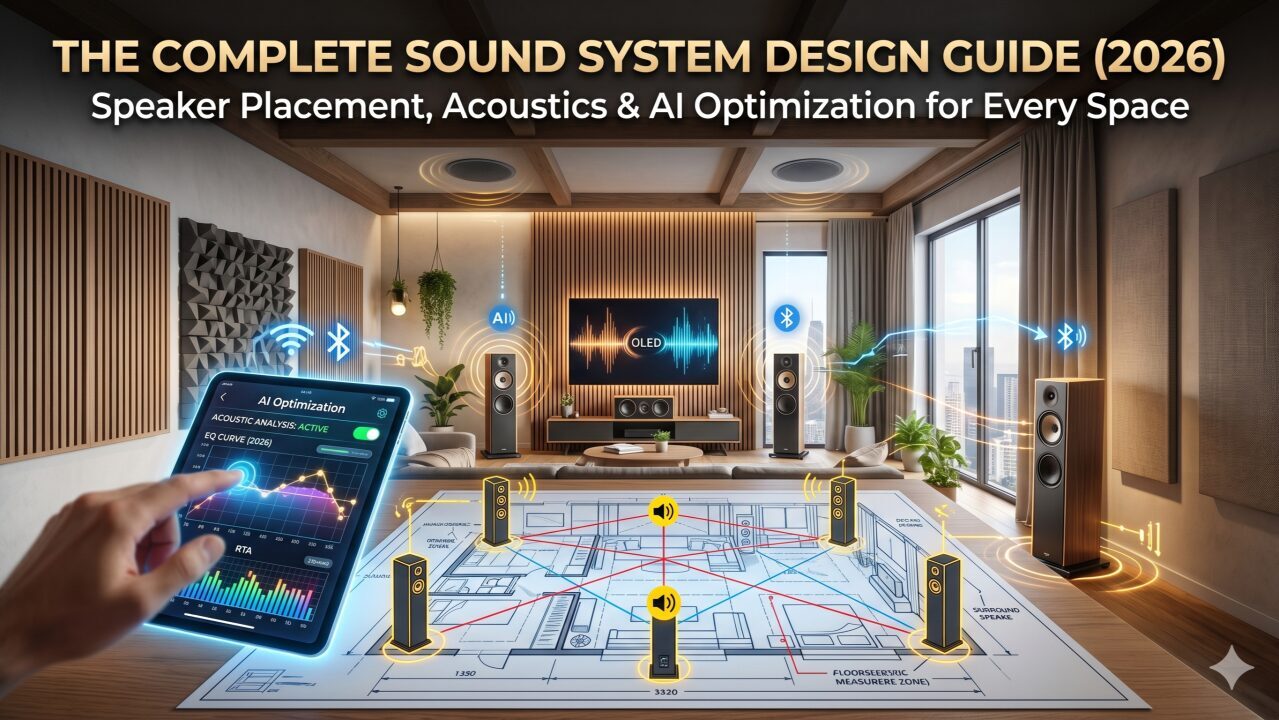
A great sound system isn’t just about buying expensive speakers it’s about how those components work together within a space. Poor sound system design can ruin clarity, distort audio, and create uneven coverage, even with premium equipment. On the other hand, a well-designed system delivers immersive, balanced, and consistent audio across every corner of the room.
In 2026, sound system design has evolved beyond manual calculations and trial-and-error setups. Today, professionals and integrators rely on AI-powered tools, acoustic modeling, and intelligent speaker placement systems to achieve precision that was once impossible.
What Is Sound System Design?
Sound system design is the process of planning, selecting, and positioning audio equipment to achieve optimal sound quality in a specific environment. It goes beyond simply installing speakers it involves:
- Acoustic analysis
- Equipment selection
- Speaker placement
- Signal processing
- Calibration
Many people confuse setup with design. Setup is execution. Design is strategy.
If you're new to the fundamentals, you can explore a deeper breakdown in the
That guide explains how layout planning, equipment selection, and acoustics work together before installation even begins.
Core Components of a Sound System
Understanding the building blocks of any sound system is critical before diving into placement or AI optimization.
1. Speakers & Coverage
Speakers are responsible for delivering sound, but their placement determines how effectively that sound is distributed.
- Point source speakers
- Line arrays (for large venues)
- Surround sound speakers (for home theaters)
Coverage is key every listener should experience consistent sound levels without dead zones or excessive loud spots.
2. Amplifiers & Signal Processing
Amplifiers power the system, while DSP (Digital Signal Processing) ensures audio is optimized.
- Equalization
- Delay alignment
- Frequency tuning
These elements ensure clarity and balance across the listening area.
3. Source & Control Systems
These include mixers, media players, and control interfaces that manage the audio signal flow.
Modern systems increasingly integrate automation and AI for real-time adjustments.
Speaker Placement Fundamentals: The Backbone of Audio Quality
No matter how advanced your equipment is, speaker placement determines 70–80% of your sound quality.
Why Placement Matters More Than Equipment
Incorrect placement leads to:
- Audio phase issues
- Poor stereo imaging
- Uneven sound distribution
Correct placement ensures:
- Balanced coverage
- Clear dialogue
- Immersive sound experience
Center Channel Speaker Placement (Critical for Dialogue)
In home theaters, the center channel speaker is responsible for dialogue clarity. Misplacing it can result in muffled or misaligned sound.
For a complete installation walkthrough, check:
This guide explains:
- Ideal height and angle
- Mounting techniques
- Common mistakes to avoid
Surround Sound Speaker Placement
Surround sound systems create immersive environments but only when speakers are correctly positioned.
To understand how automation improves this process, explore:
Using a Speaker Coverage Calculator
A speaker coverage calculator helps determine:
- Speaker quantity
- Placement angles
- Coverage overlap
Instead of guessing, you can simulate real-world performance and avoid costly mistakes.
Sound System Design for Different Spaces
Each environment has unique challenges that require tailored design approaches.
Gymnasiums & Large Venues
Gymnasiums are among the most challenging spaces due to:
- High ceilings
- Hard reflective surfaces
- Large audience areas
These conditions create echoes and reverberation issues.
To understand how to design effectively for such environments, read:
Key considerations:
- Distributed speaker systems
- Directional audio control
- Echo reduction strategies
Churches & Worship Spaces
Churches require a balance between:
- Speech clarity
- Musical richness
Reverberation can enhance music but harm speech intelligibility.
For a detailed breakdown, explore:
Key design priorities:
- Even sound distribution
- Feedback control
- Acoustic treatment
Home Theaters & Smart Living Spaces
Home theaters demand precision and immersion.
Key elements:
- Surround sound placement
- Center channel accuracy
- Acoustic tuning
Acoustic Planning Essentials
Even perfect speaker placement can fail without proper acoustics.
Reflection, Absorption & Diffusion
- Reflection: Causes echo
- Absorption: Reduces harshness
- Diffusion: Spreads sound evenly
Room Shape & Materials
- Glass and concrete reflect sound
- Carpets and panels absorb sound
Common Acoustic Mistakes
- Ignoring wall reflections
- Overusing absorption
- Poor speaker alignment
AI in Sound System Design: The Game-Changer
AI is transforming how sound systems are designed and optimized.
What Is AI Speaker Placement?
AI uses algorithms and acoustic modeling to determine optimal speaker positions automatically.
To explore this in detail
Smart Calibration & Acoustic Modeling
AI systems can:
- Analyze room acoustics
- Adjust speaker output in real-time
- Optimize frequency response
Benefits of AI in AV Design
- Faster design process
- Increased accuracy
- Reduced manual effort
- Predictive performance modeling
Step-by-Step Sound System Design Workflow
1. Analyze the Space
- Room dimensions
- Materials
- Usage type
2. Select Equipment
- Speakers
- Amplifiers
- DSP
3. Plan Speaker Placement
Use tools like speaker coverage calculators and AI software.
4. Implement Acoustic Treatment
- Panels
- Diffusers
- Bass traps
5. Calibrate the System
Manual tuning or AI-based calibration.
Common Sound System Design Mistakes
- Poor speaker placement
- Ignoring acoustics
- Overpowering the system
- Lack of calibration
Avoiding these mistakes can drastically improve performance.
Tools & Technologies for Modern Sound System Design
Modern AV professionals rely on:
- Speaker coverage calculators
- Acoustic simulation tools
- AI-driven AV design platforms
These tools reduce guesswork and improve accuracy.
Future Trends in Sound System Design
The future of sound system design includes:
- Fully automated AV systems
- AI + IoT integration
- Real-time adaptive audio environments
Sound systems will soon adjust dynamically based on occupancy, noise levels, and usage.
FAQs
What is the best way to design a sound system?
Start with room analysis, followed by equipment selection, speaker placement, acoustic treatment, and calibration.
How do you calculate speaker placement?
Using tools like speaker coverage calculators or AI-based software to ensure even distribution.
What is a speaker coverage calculator?
A tool that helps determine optimal speaker placement and coverage for a specific space.
How does AI improve sound systems?
AI automates placement, calibration, and acoustic optimization, improving accuracy and efficiency.
Conclusion
Sound system design is no longer just about hardware it’s about strategy, precision, and intelligent optimization. From gymnasiums to churches to home theaters, each space demands a tailored approach.
By combining:
- Strong fundamentals
- Proper speaker placement
- Acoustic planning
- AI-driven optimization
…you can create systems that deliver exceptional audio experiences.
To deepen your expertise, explore the detailed guides linked throughout this article and continue building your knowledge across every aspect of sound system design.
Read our other blogs
Top 10 Better Proposals Alternatives in 2026
Top 10 Online Handwritten Signature Generators
How Do You Write an Offer Letter for a Raise? Free Sample
Top 7 Proposal Software for Accountants in 2026
How to Start a Vending Machine Business: Complete Guide
How to Create a Sales Proposal Template That Closes Deals
How to pick the best floor plan software for your needs