
Diwali 2026 Budget Planning: How to Celebrate Without Overspending
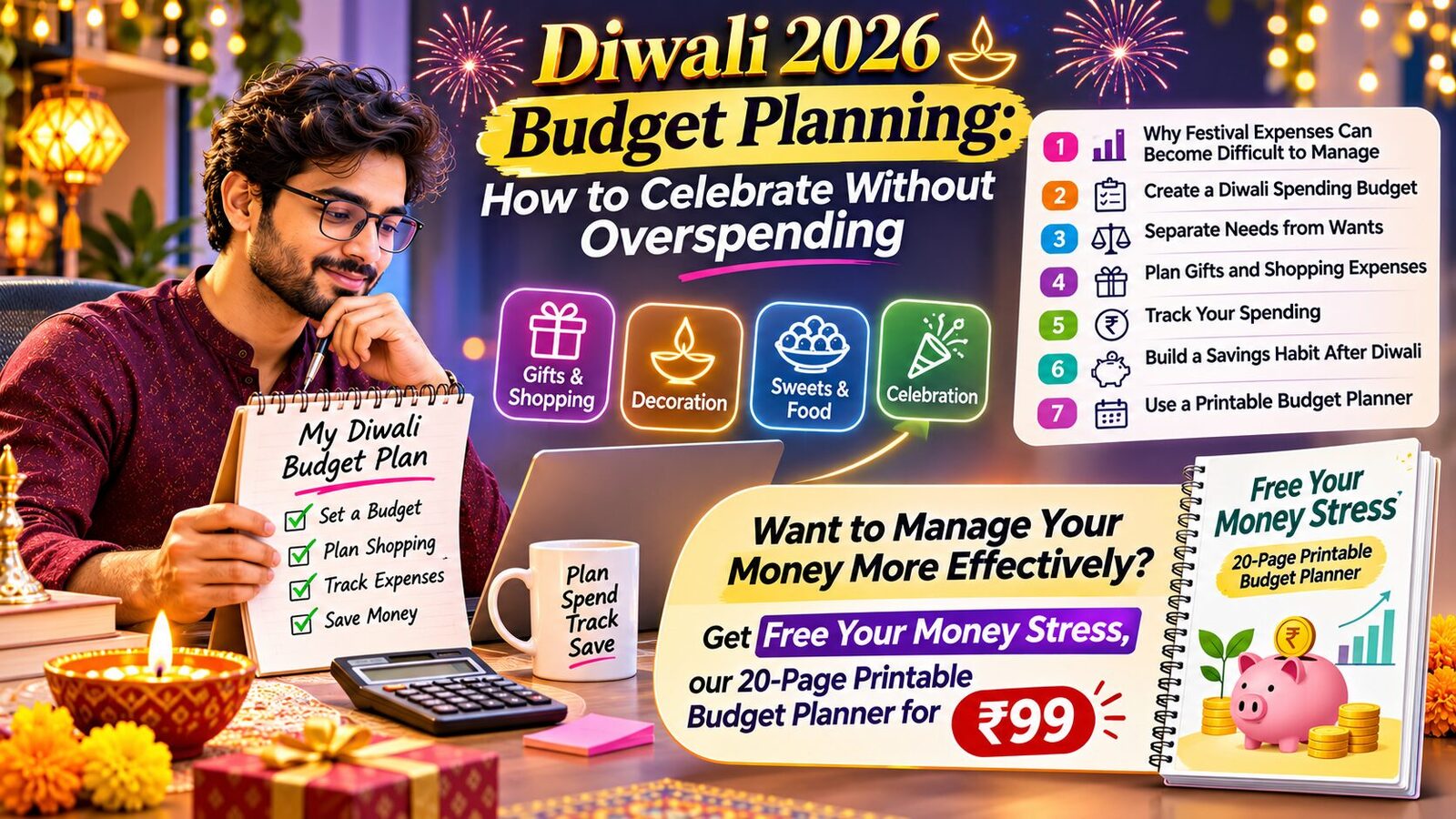
Diwali is one of the most celebrated festivals in India. From decorating homes and buying gifts to purchasing new clothes, preparing sweets, hosting family gatherings, and enjoying festive shopping, there are countless reasons to celebrate.
However, there is one challenge that many households face every year: managing festival expenses.
You start with a small shopping list, but additional purchases gradually increase your spending. A few extra decorations, expensive gifts, attractive online discounts, and last-minute shopping can make your budget difficult to control.
Before you realize it, your festival expenses may exceed the amount you originally planned.
This is why Diwali budget planning is important.
Celebrating Diwali doesn't mean you need to spend more money. You can enjoy the festival, purchase meaningful gifts, decorate your home, and spend quality time with your family without creating unnecessary financial pressure.
The secret is simple: plan your expenses, understand your priorities, track your spending, and develop healthy financial habits.
Whether you are a salaried employee, freelancer, student, business owner, or homemaker, having a clear festival budget can help you enjoy the celebrations more confidently.
In this guide, we will explore seven practical ways to plan your Diwali expenses in 2026, avoid overspending, and build better personal finance management habits.
1. Why Festival Expenses Can Become Difficult to Manage
Festivals bring happiness, but they can also create additional financial responsibilities.
During Diwali, people often spend money across several categories, sometimes without realizing how quickly small purchases add up.
For example, consider a household planning to spend ₹10,000 on Diwali celebrations.
Initially, the budget might look manageable:
Clothes: ₹2,500
Gifts: ₹2,000
Decorations: ₹1,000
Sweets and food: ₹1,500
Travel and miscellaneous expenses: ₹1,000
Additional shopping: ₹2,000
But unexpected purchases can increase these amounts.
You might purchase an additional outfit, upgrade a gift, order more sweets, or take advantage of a limited-time online offer.
The problem is not necessarily that these purchases are wrong. The problem is making spending decisions without understanding their impact on your overall finances.
Common reasons people overspend during Diwali
1. Emotional shopping
Festive shopping can create excitement. Sometimes, people purchase items simply because they look attractive or are associated with the celebrations.
2. Social pressure
Seeing friends, relatives, or colleagues purchase expensive products can influence spending decisions.
3. Attractive discounts
A product advertised with a large discount may appear like a great deal, even when it is not something you actually need.
4. Last-minute shopping
When you delay planning, you may have fewer affordable options and less time to compare prices.
5. No spending limit
Without a fixed budget, it becomes difficult to understand how much you can comfortably spend.
The first step toward better festival spending is recognizing these habits.
Remember, a successful Diwali celebration should not leave you struggling with bills or financial stress after the festival.
2. Create a Realistic Diwali Spending Budget
The foundation of effective Diwali budget planning is deciding how much money you can comfortably spend.
Before shopping, review your monthly income, existing expenses, savings commitments, and upcoming financial responsibilities.
Your festival budget should come from money available after accounting for essential obligations, not from money reserved for rent, EMIs, bills, or emergency savings.
Step 1: Decide your total festival budget
Start with a realistic spending limit.
For example, suppose you decide to allocate ₹10,000 for Diwali.
This is your maximum spending limit, not a target that you must necessarily reach.
Step 2: Divide your budget into categories
A sample ₹10,000 Diwali budget could look like this:
| Expense category | Budget |
|---|---|
| Clothes and personal shopping | ₹2,000 |
| Gifts | ₹2,000 |
| Decorations and diyas | ₹1,000 |
| Sweets and groceries | ₹1,500 |
| Family celebrations | ₹1,500 |
| Travel and miscellaneous | ₹1,000 |
| Contingency reserve | ₹1,000 |
| Total | ₹10,000 |
<em>These figures are illustrative. Adjust them according to your income, household size, and financial commitments.</em>
Step 3: Keep a small contingency reserve
Unexpected expenses can arise during festivals.
Instead of allocating every rupee to planned purchases, keep a small amount aside for additional requirements.
This reduces the possibility of disturbing your other financial commitments.
Step 4: Review your budget before shopping
Check your available budget before making major purchases.
If you have already spent ₹3,000 on gifts and shopping, consider the remaining amount before buying anything else.
A written budget makes these decisions easier.
Practical tip: Use a spreadsheet, notebook, or printable budget planner to record your planned expenses before the festive season begins.
3. Separate Your Needs from Your Wants
One of the most useful Diwali savings tips is learning to distinguish between necessary purchases and optional spending.
During festivals, many products look attractive because of seasonal advertisements, limited-time offers, and promotional campaigns.
However, not every purchase contributes equally to your celebrations.
For example:
| Purchase | Category | Priority |
|---|---|---|
| Essential groceries | Need | High |
| Basic home decorations | Planned expense | Medium |
| New festive clothes | Personal preference | Medium |
| Expensive decorative items | Want | Low |
| Additional gadgets | Want | Low |
| Gifts for close family | Planned expense | Medium |
The purpose of this exercise is not to stop enjoying the festival. It is to make sure your money goes toward the things that matter most.
Use the 24-hour shopping rule
For non-essential purchases, wait 24 hours before placing an order.
During this period, ask yourself:
Do I genuinely need this product?
Does it fit within my budget?
Can I find a more affordable alternative?
Will I still want it tomorrow?
Am I purchasing it because of a discount or actual need?
This simple habit can help reduce impulsive purchases.
Avoid spending just to impress others
You do not need expensive clothes, luxury gifts, or elaborate decorations to make Diwali memorable.
A thoughtful gift, homemade sweets, a clean and beautifully decorated home, and time with family can create meaningful celebrations.
Spend according to your financial situation rather than comparing your lifestyle with others.
4. Plan Gifts and Shopping Expenses in Advance
Gift shopping is an important part of Diwali, but it can also become one of the biggest sources of unnecessary spending.
Without proper planning, you may end up buying gifts at the last minute, paying more than expected, or purchasing items that recipients do not really need.
A better approach is to create a gift list before you begin shopping.
Create a Diwali gift list
Start by identifying the people you want to give gifts to.
For example:
Parents and immediate family.
Relatives.
Friends.
Colleagues.
Business clients.
Employees or professional partners.
Next, assign a spending limit to each category.
You can use this simple example:
| Gift category | Suggested budget |
|---|---|
| Immediate family | ₹1,500 |
| Relatives | ₹1,000 |
| Friends | ₹500 |
| Colleagues | ₹500 |
| Business contacts | ₹500 |
| Total | ₹4,000 |
The amounts are examples, not recommended spending requirements.
Compare prices before purchasing
Before buying products, compare prices across different retailers and marketplaces.
Consider:
Product quality.
Customer reviews.
Delivery charges.
Return policies.
Actual selling price.
Whether the discount is genuine.
Don't assume that every festive sale offers the lowest price.
Consider meaningful, affordable gifts
Some thoughtful alternatives include:
Handmade greeting cards.
Small indoor plants.
Homemade sweets.
Personalized photo frames.
Useful stationery.
Affordable home décor.
Digital gifts and printable resources.
A meaningful gift does not need to be expensive.
Avoid unnecessary credit purchases
Try not to purchase gifts simply because a credit card or buy-now-pay-later option makes payment appear easier.
If you cannot comfortably afford a purchase, reconsider whether it belongs in your festival budget.
The objective is to enjoy Diwali without carrying unnecessary financial obligations into the following months.
5. Track Your Spending with a Festival Expense Tracker
Creating a budget is only the beginning. You also need to monitor your actual spending.
This is where a festival expense tracker becomes useful.
Many people create a budget at the beginning of the month but forget to update it after making purchases.
As a result, they lose track of their remaining balance.
An expense tracker helps you understand where your money is going and whether you are following your original plan.
What should your festival expense tracker include?
Your tracker should contain these basic columns:
| Date | Expense | Planned | Actual |
|---|---|---|---|
| 10 Oct | Decorations | ₹1,000 | ₹850 |
| 12 Oct | Clothes | ₹2,000 | ₹2,200 |
| 14 Oct | Gifts | ₹2,000 | ₹1,800 |
| 16 Oct | Sweets | ₹1,500 | ₹1,400 |
| 18 Oct | Travel | ₹1,000 | ₹900 |
<em>Illustrative example only.</em>
You can calculate the difference between planned and actual spending to identify categories where you are overspending or saving money.
Simple methods to track expenses
1. Use a notebook
If you prefer traditional methods, maintain a dedicated notebook for festival expenses.
Record every purchase immediately.
2. Use a spreadsheet
Google Sheets or Microsoft Excel can help you calculate totals and compare your planned budget with actual expenses.
3. Use a budgeting application
You can explore personal finance applications that offer expense categorization and spending reports.
4. Use a printable expense tracker
A printable planner is useful if you prefer writing expenses manually and keeping everything organized in one place.
Review your spending regularly
Don't wait until Diwali is over to review your purchases.
Check your expenses every two or three days.
If you are approaching your spending limit, adjust your remaining purchases accordingly.
This simple practice makes personal finance management more organized and helps prevent unpleasant surprises.
6. Build a Savings Habit After Diwali
Financial planning should not end when the festival is over.
In fact, the period after Diwali is an excellent opportunity to review your spending habits and establish better savings routines.
Many people focus heavily on festival shopping but forget about their financial responsibilities in the following months.
Once the celebrations are over, review your actual expenses and compare them with your original budget.
Step 1: Calculate your total festival spending
Add up all your Diwali purchases.
Identify which categories remained within budget and which exceeded expectations.
Step 2: Identify unnecessary expenses
Think about purchases you could have avoided.
For example:
Clothes you rarely wear.
Decorative items you didn't need.
Impulsive online orders.
Duplicate household purchases.
Expensive gifts purchased because of social pressure.
Use these observations to improve your next festival budget.
Step 3: Start a dedicated festival savings fund
Instead of arranging the entire festival budget at the last minute, begin saving gradually for future celebrations.
For example, if your target festival budget is ₹12,000 and you have 12 months to prepare:
[
₹12,000 \div 12 = ₹1,000
]
You would need to save approximately ₹1,000 every month to reach that target, assuming no interest or investment returns.
You can adjust the amount according to your income and expenses.
Step 4: Automate your savings
If possible, schedule a monthly transfer to a dedicated savings account after receiving your income.
Treat savings as a planned financial commitment rather than something you do only when money remains.
Step 5: Rebuild your financial cushion
If you used money that was originally intended for other savings goals, create a plan to replenish it.
Avoid trying to recover your finances through risky investments or unrealistic savings targets.
Small, consistent habits are more sustainable.
7. Use a Printable Monthly Budget Planner to Stay Organized
Managing festival expenses becomes easier when you have a clear system for tracking your income, spending, savings, and financial goals.
However, budgeting should not be limited to Diwali.
A monthly budget planner can help you organize your finances throughout the year.
Instead of making financial decisions randomly, you can use a structured document to understand how much you earn, where your money goes, and what you want to save.
What should a good budget planner include?
A practical budget planner should help you organize the following areas:
1. Monthly income tracker
Record your salary, freelance income, business earnings, and other sources of income.
2. Fixed expense tracker
Include rent, EMIs, subscriptions, insurance premiums, and regular household bills.
3. Variable expense tracker
Monitor groceries, transportation, shopping, entertainment, and other changing expenses.
4. Savings goals
Set targets for emergency savings, future purchases, travel, education, and other financial priorities.
5. Debt and payment tracker
Record outstanding balances, due dates, and planned payments.
6. Monthly spending review
Compare your budget with actual expenses and identify areas for improvement.
7. Financial goal planner
Write down short-term and long-term financial goals and review your progress regularly.
Why printable budget planners are useful
A printable planner gives you a dedicated place to organize your financial information.
You can print the pages you need, write down expenses manually, and review your progress whenever necessary.
It can also make budgeting easier for people who prefer physical worksheets instead of complicated financial applications.
The important thing is not which format you choose. It is whether you use it consistently.
Bonus: 10 Practical Diwali Savings Tips for 2026
Here are ten additional holiday spending tips to help you celebrate without overspending.
Set a spending limit: Decide your maximum festival budget before shopping.
Prepare a shopping list: Purchase only the products you have planned.
Compare prices: Check multiple retailers before making major purchases.
Avoid impulse buying: Give yourself time to reconsider non-essential purchases.
Reuse decorations: Bring out decorations from previous celebrations.
Choose meaningful gifts: Focus on usefulness and thoughtfulness rather than price.
Shop early: Avoid last-minute purchases and rushed decisions.
Limit unnecessary food waste: Plan meals and sweets according to your household's requirements.
Track every expense: Record purchases in your festival expense tracker.
Protect your savings: Don't use money reserved for essential bills and financial priorities.
Remember, the best savings strategy is one that allows you to enjoy the festival while maintaining control over your finances.
Want to Manage Your Money More Effectively? Get Free Your Money Stress
Creating a budget is easy. Following it consistently is where many people struggle.
You may know how much you earn, but do you know exactly where your money goes every month?
Do you have a clear picture of your spending habits, savings goals, upcoming payments, and financial priorities?
If you want to organize your finances more effectively, a structured budget planner can make the process easier.
Introducing:
Free Your Money Stress – 20-Page Printable Budget Planner
This digital printable resource is designed to help you organize your personal finances and develop better budgeting habits.
What can you use a budget planner for?
Organizing monthly income and expenses.
Tracking everyday spending.
Planning savings goals.
Monitoring financial responsibilities.
Reviewing your monthly budget.
Building more consistent money-management habits.
Whether you are a student, working professional, freelancer, homemaker, or small business owner, having a structured budgeting system can help you become more aware of your financial decisions.
<em>Your money deserves a plan. Start building better financial habits today.</em>
Get your 20-page printable Budget Planner for just ₹99.
Want to manage your money more effectively? Get Free Your Money Stress today.
Final Thoughts: Enjoy Diwali Without Financial Stress
Diwali is a time for happiness, family, celebrations, and new beginnings.
You don't need to spend beyond your means to make the festival special.
With effective Diwali budget planning, you can organize your shopping, manage gift expenses, track your purchases, and protect your savings.
Start with a realistic spending limit, prioritize essential purchases, compare prices, and review your expenses regularly.
Most importantly, continue practicing good financial habits even after the festival ends.
Remember that financial well-being is not about avoiding every expense. It is about making thoughtful decisions that support your current needs and future goals.
This Diwali 2026, celebrate with happiness, spend with awareness, and make room for a financially healthier year ahead.
Happy Diwali 2026! May your celebrations be bright and your financial future even brighter.