
Limb Lengthening Surgery Explained: Techniques, Eligibility, Costs, and Long-Term Outcomes
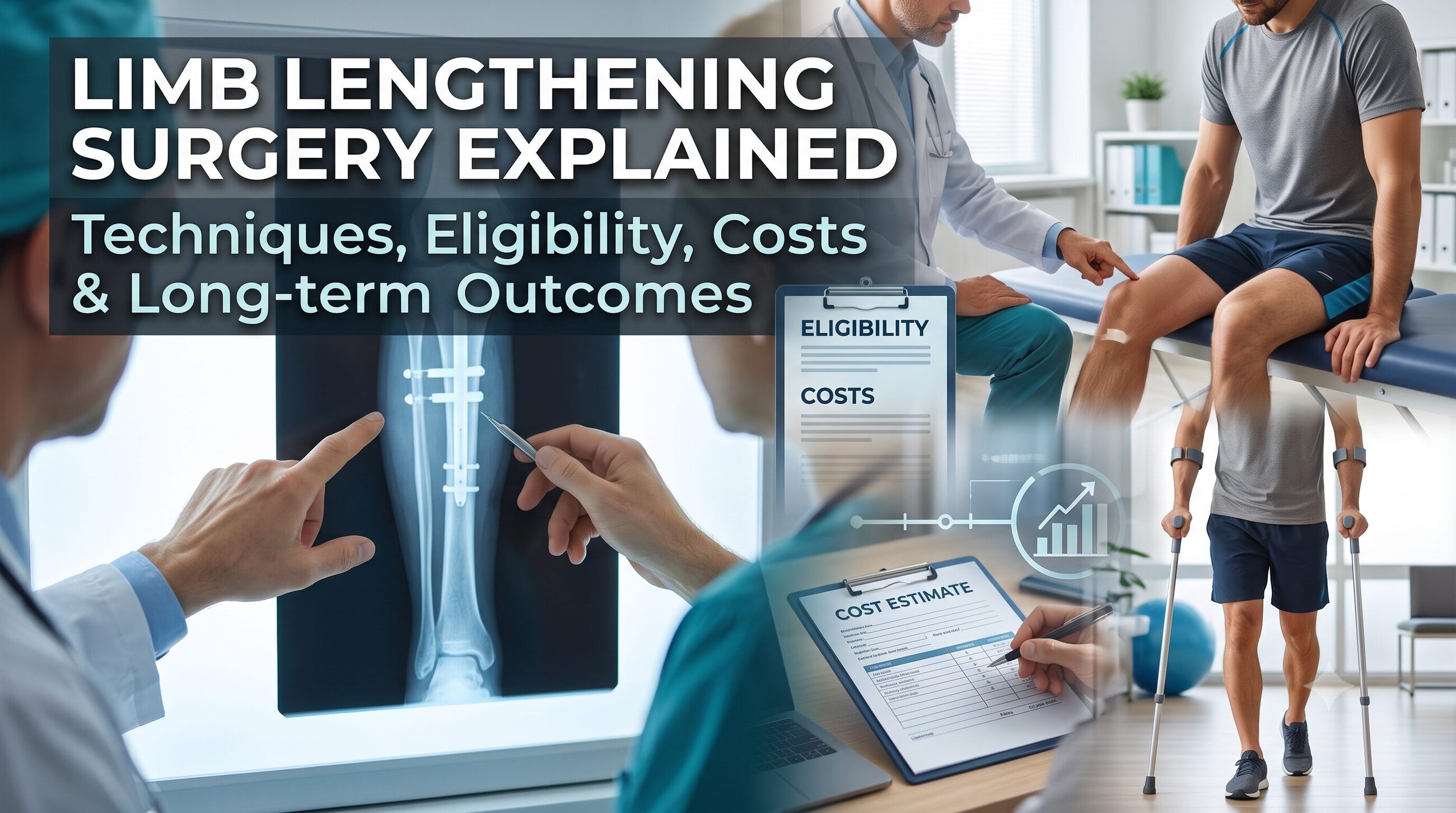
Limb lengthening surgery is an advanced orthopedic procedure that gradually increases the length of a bone. It is used to correct differences in leg length, treat selected congenital bone conditions, address certain deformities, and increase height in carefully selected adults for cosmetic reasons. The procedure works through a biological process in which new bone forms in a controlled gap created during surgery.
Interest in limb lengthening surgery has increased as orthopedic technology has advanced. Modern techniques include external fixation systems and internal motorized lengthening nails that allow surgeons to gradually separate bone segments. However, limb lengthening remains a major surgical procedure that requires careful patient selection, regular medical monitoring, and an extended rehabilitation program.
People researching this procedure often have several questions. How does limb lengthening surgery work? How much height can it add? Is limb lengthening surgery safe in India? What is the limb lengthening surgery cost in India? How long does recovery take, and what are the possible long-term complications?
The answers depend on the patient's anatomy, medical history, surgical technique, treatment goals, and ability to complete rehabilitation. There is no single procedure, price, or recovery timeline that applies to everyone.
India offers limb lengthening treatment through various orthopedic hospitals and specialized centers. However, choosing a hospital should involve more than comparing advertised prices. Patients should consider the surgeon's qualifications, experience with the proposed technique, facilities for monitoring bone healing, rehabilitation services, and arrangements for managing complications.
This guide explains limb lengthening surgery in detail, including the procedure, eligibility criteria, surgical techniques, expected height gains, recovery timeline, risks, long-term outcomes, and cost considerations in India.
Medical disclaimer: This article is intended for educational purposes and does not replace professional medical advice. Anyone considering limb lengthening surgery should consult a qualified orthopedic surgeon specializing in limb reconstruction.
Key Takeaways
Limb lengthening surgery gradually increases bone length through a process called distraction osteogenesis.
The procedure can treat limb-length discrepancies, selected congenital conditions, acquired deformities, and certain cases involving elective height increase.
Common techniques include external fixation, combined fixation methods, and internal motorized lengthening nails.
Suitable candidates require a comprehensive medical assessment, appropriate bone health, realistic expectations, and the ability to follow a prolonged rehabilitation program.
The amount of height gained varies according to the bone being lengthened, individual anatomy, soft-tissue flexibility, and the surgeon's treatment plan.
The cost of limb lengthening surgery in India depends on the surgical technique, implants, hospital, number of bones treated, rehabilitation, and follow-up care.
Recovery can take many months and may extend longer if bone healing is delayed or complications occur.
Potential risks include infection, nerve irritation or injury, joint stiffness, muscle contractures, delayed bone healing, alignment problems, and additional surgery.
Cosmetic height lengthening and reconstructive limb lengthening have different objectives and require individualized risk-benefit assessments.
Patients should compare complete treatment plans, verify the surgeon's relevant experience, and understand the total expected cost before making a decision.
What Is Limb Lengthening Surgery?
Limb lengthening surgery is an orthopedic procedure that gradually increases the length of a bone, usually the femur (thigh bone) or tibia (shin bone). It relies on a biological process known as distraction osteogenesis, in which new bone develops between two bone segments that are gradually separated.
During surgery, the orthopedic surgeon makes a controlled cut in the bone, called an osteotomy. A specialized device stabilizes the bone and allows the two segments to move apart gradually. As the gap increases, the body forms new bone tissue within the space.
The surrounding muscles, tendons, nerves, blood vessels, and skin must also adapt to the increased length. This is why limb lengthening requires regular monitoring and physiotherapy rather than simply extending the bone to a desired measurement.
How Does the Body Form New Bone?
Distraction osteogenesis generally involves three stages.
1. Latency phase
After surgery, the body begins its initial healing response. The surgeon allows a short period for early bone repair before gradual lengthening begins.
2. Distraction phase
The device gradually separates the bone segments. New bone tissue develops in the gap while the surrounding soft tissues adapt to the change in length. The rate of distraction is determined by the surgeon and may be adjusted according to bone formation, joint movement, pain, and nerve function.
3. Consolidation phase
Once the planned length has been achieved, the newly formed bone gradually hardens and strengthens. This phase is essential because reaching the desired height does not mean the bone is immediately ready for unrestricted activity.
A rate close to 1 millimeter per day is used in some treatment protocols, but the appropriate rate varies between patients. It should never be treated as a universal instruction.
Which Bones Can Be Lengthened?
Limb lengthening most commonly involves the femur and tibia.
Femur lengthening: Increases the length of the thigh bone.
Tibia lengthening: Increases the length of the shin bone.
Combined femur and tibia lengthening: Treats both bone segments, sometimes in separate stages.
The appropriate bone depends on the patient's medical condition, limb proportions, bone anatomy, and treatment goals. Some reconstructive cases may involve other bones.
Limb lengthening is not exclusively a cosmetic procedure. It is also an established orthopedic approach for selected patients who need correction of a limb-length discrepancy or bone deformity.
Why Is Limb Lengthening Surgery Performed?
Limb lengthening surgery may be considered when a bone is shorter than expected, a difference in leg length affects function, or a carefully selected adult wants to increase height.
The reasons for surgery generally fall into the following categories.
1. Limb-Length Discrepancy
A limb-length discrepancy occurs when one leg is shorter than the other. The difference may be present from birth or develop because of an injury, infection, growth-plate damage, or another orthopedic condition.
A significant discrepancy can affect walking mechanics, pelvic alignment, and certain daily activities. However, not every difference requires surgery. Smaller discrepancies may be managed with shoe lifts or other non-surgical measures.
An orthopedic specialist evaluates the severity of the discrepancy, its cause, associated symptoms, and the potential benefits and risks of lengthening before recommending treatment.
2. Congenital Bone Conditions
Some people are born with conditions that affect bone development or limb proportions. Depending on the diagnosis, one limb may be shorter than the other, or a deformity may develop during growth.
Limb lengthening may be considered as part of a broader reconstructive plan. Treatment may also involve correcting alignment or addressing other orthopedic problems.
The surgical approach depends on the specific condition, the patient's age, growth status, bone anatomy, and expected functional improvement.
3. Limb Shortening After Injury or Disease
Severe fractures, bone infections, growth-plate injuries, and other medical conditions can leave a bone shorter than the opposite limb.
If the resulting difference is substantial, an orthopedic surgeon may assess whether lengthening can help restore alignment and improve function. The treatment plan must also consider existing damage, bone healing, and joint health.
4. Selected Skeletal Conditions
Certain skeletal conditions can affect bone growth and overall stature. In selected cases, limb reconstruction may be discussed as part of a wider treatment plan.
Eligibility depends on the underlying diagnosis, joint function, bone quality, overall health, and expected benefits. Limb lengthening is not appropriate for every person with short stature.
5. Cosmetic Height Increase
Some adults consider limb lengthening surgery to increase their height. Unlike reconstructive procedures, cosmetic lengthening is generally elective and is undertaken primarily to change stature.
Because patients may otherwise be physically healthy, the expected benefit must be weighed carefully against the risks of major surgery, prolonged rehabilitation, potential complications, and financial costs.
A responsible consultation should address realistic height goals, alternatives, psychological readiness, and the possibility that the final result may differ from expectations.
Who Is a Suitable Candidate for Limb Lengthening Surgery?
A suitable candidate is someone whose medical condition, bone anatomy, overall health, expectations, and ability to participate in rehabilitation make the potential benefits of surgery reasonable compared with its risks.
There is no universal checklist that guarantees eligibility. A qualified orthopedic surgeon must assess each patient individually.
Medical and Physical Requirements
The surgeon may evaluate several factors before recommending treatment.
Bone health: The bone must be capable of forming and consolidating new tissue.
Joint mobility: The hip, knee, and ankle must be assessed for stiffness and movement restrictions.
Muscle flexibility: Muscles and tendons need to adapt as the bone lengthens.
Overall health: Medical conditions, medications, smoking, nutritional status, and other factors can affect surgical risk and healing.
Bone anatomy: Imaging helps determine the location of the discrepancy, alignment, and suitable fixation device.
Rehabilitation commitment: Patients must attend appointments, undergo imaging, perform prescribed exercises, and follow weight-bearing restrictions.
These factors help determine whether surgery is appropriate and which technique may be suitable.
Is There a Minimum Age for Limb Lengthening Surgery?
Age requirements depend on the reason for surgery and the patient's stage of development.
For cosmetic height increase, surgeons generally evaluate adults whose skeletal growth is complete. Operating before growth is complete may be inappropriate because future growth can affect the result.
For reconstructive conditions in children or adolescents, lengthening may sometimes be considered under specialist care. These cases require treatment plans that account for growth and future development.
Patients should ask how skeletal maturity has been assessed and why the proposed timing is appropriate.
Who May Not Be a Suitable Candidate?
Surgery may be delayed or considered unsuitable when a patient has uncontrolled medical conditions, active infection, poor bone-healing potential, significant joint stiffness, or an inability to complete rehabilitation.
Unrealistic expectations or psychological distress that has not been appropriately assessed may also require further discussion before elective surgery.
These concerns do not automatically exclude every patient. They require individualized evaluation and, where possible, medical optimization before treatment.
Why Psychological Readiness Matters
Limb lengthening can involve months of physical restrictions, frequent appointments, reduced independence, and changes to work or study routines.
Patients considering cosmetic height increase should understand what surgery can and cannot achieve. They should also consider how they would feel if the final height gain were smaller than planned or recovery took longer than expected.
Psychological support may be useful for individuals experiencing significant distress related to body image or the demands of recovery.
What Happens During the Initial Consultation?
An initial consultation may include:
A detailed medical history and physical examination.
Measurement of leg length and assessment of walking patterns.
X-rays and other imaging when indicated.
Evaluation of bone health and relevant medical conditions.
Discussion of surgical techniques and realistic treatment goals.
Explanation of risks, alternatives, and rehabilitation requirements.
A written treatment estimate and follow-up plan.
A good consultation should provide a clear understanding of the expected benefits, limitations, and uncertainties before the patient decides to proceed.
Types of Limb Lengthening Surgery and Techniques
Limb lengthening techniques differ in how they stabilize the bone and control gradual separation. The appropriate method depends on the medical indication, bone anatomy, intended lengthening, the surgeon's experience, device availability, and the patient's circumstances.
No technique is universally best for every patient.
1. External Fixation
External fixation uses a frame attached to the bone through pins or wires that pass through the skin. The frame stabilizes the bone and allows controlled adjustments during the lengthening process.
Common systems include the Ilizarov circular frame, monolateral external fixators, and computer-assisted frames such as the Taylor Spatial Frame.
Advantages of external fixation:
Can be useful for complex bone deformities and selected reconstructive procedures.
Allows controlled lengthening and, with appropriate systems, correction of alignment in multiple directions.
Can be suitable for patients whose anatomy or clinical circumstances make internal implants less appropriate.
Disadvantages of external fixation:
The frame remains outside the limb during treatment.
Pin-site infections, skin irritation, and discomfort can occur.
The frame may interfere with clothing, sleep, and everyday activities.
Regular frame care, clinical monitoring, and physiotherapy are essential.
External fixation remains an important option in limb reconstruction, particularly for selected complex cases.
2. Internal Motorized Lengthening Nails
Internal lengthening nails are telescopic devices implanted inside the bone. Some motorized systems use an external remote controller to activate a mechanism inside the nail, allowing gradual lengthening without a large external frame.
PRECICE is one example of an internal magnetic lengthening system. Apollo Hospitals describes its PRECICE procedure as a technique in which a telescopic nail is implanted into the bone and gradually lengthened using an external controller. Read the procedure overview from Apollo Hospitals.
FITBONE is another internal motorized lengthening system. Patients should confirm the current availability, indications, compatibility, and regulatory status of any proposed device with their treating hospital.
Advantages of internal lengthening nails:
The lengthening device is placed inside the bone.
There is no large external frame throughout the lengthening phase.
Some patients find daily care and clothing easier than with external fixation.
The surgeon can monitor bone formation and alignment through regular imaging.
Limitations of internal lengthening nails:
Implant and treatment costs may be higher.
The bone must have suitable dimensions and anatomy to accommodate the device.
Implant malfunction and other complications can occur.
Weight-bearing may be restricted according to the device and treatment plan.
Additional surgery, including implant removal, may be necessary.
An internal nail does not eliminate the risks of limb lengthening. Bone healing, joint movement, muscle flexibility, nerve function, and rehabilitation remain essential.
3. Combined Lengthening Techniques
Some reconstructive procedures combine external fixation with internal fixation. Examples include lengthening over a nail and lengthening followed by nailing.
These techniques may be considered in selected cases to address specific reconstructive requirements or reduce the time spent using an external frame.
They involve additional planning and are not appropriate for every patient. The surgeon should explain the potential benefits, infection risks, implant considerations, and likelihood of additional procedures.
Comparison of the Main Techniques
Feature | External fixation | Internal motorized nail |
|---|---|---|
Device location | Outside the limb, attached to bone | Inside the bone |
Lengthening control | Adjustments to the external frame | Device-specific motorized mechanism |
Pin-site care | Required | No external fixation pin sites from the internal nail itself |
Complex deformity correction | Useful in selected complex cases | Depends on the device and deformity |
Cost | Varies by frame and treatment plan | Often higher for advanced implants |
Weight-bearing | Depends on the frame and clinical plan | Often restricted according to device limits |
Rehabilitation | Essential | Essential |
This comparison describes general differences rather than recommending a specific technique. The treating surgeon should explain which approach best suits the patient's diagnosis, anatomy, and goals.
How Does Limb Lengthening Surgery Work?
Limb lengthening surgery involves preoperative planning, a surgical procedure, gradual bone distraction, regular monitoring, and rehabilitation. The process continues well beyond the initial hospital stay.
Step 1: Preoperative Planning
Before surgery, the orthopedic team evaluates the patient's bone structure, joint mobility, muscle flexibility, overall health, and intended lengthening.
Imaging helps the surgeon identify the bone segment to treat, the location of the osteotomy, the appropriate fixation device, and the planned correction. Blood tests and other investigations may be required according to the patient's medical history.
For elective height increase, the surgeon should discuss realistic goals and whether lengthening one or both bone segments is appropriate.
Step 2: The Surgical Procedure
The operation is usually performed under anesthesia. The surgeon makes a controlled cut in the selected bone and stabilizes it using an external fixator, internal lengthening nail, or another appropriate fixation method.
The purpose is to create a controlled environment in which the bone segments can gradually separate and new bone can form.
The precise surgical approach, operating time, hospital stay, and postoperative instructions vary according to the procedure and the patient's condition.
Step 3: The Latency Period
Lengthening does not necessarily begin immediately after surgery. A short latency period allows the body's initial healing response to develop.
The timing depends on the treatment plan and clinical circumstances. Patients should never start or change the lengthening process without the surgeon's instructions.
Step 4: Gradual Distraction
During the distraction phase, the device gradually separates the bone segments. A rate near 1 millimeter per day is used in some protocols, but the appropriate rate varies and may need adjustment.
Regular appointments and imaging help the surgeon evaluate bone formation and alignment. The medical team also monitors joint movement, muscle tightness, pain, sensation, and circulation.
If new bone forms too slowly or the surrounding tissues struggle to adapt, the surgeon may modify or temporarily pause the lengthening process.
Step 5: Bone Consolidation
After the planned length has been achieved, the newly formed bone needs time to harden and strengthen.
This consolidation phase may last several months. Its duration depends on the amount of lengthening, the bone involved, the device, and the patient's healing response.
Reaching the intended height does not mean the treatment is complete or that unrestricted weight-bearing is immediately safe.
Step 6: Rehabilitation
Physiotherapy helps maintain joint movement, manage muscle tightness, improve strength, and restore safe mobility.
The program may include prescribed range-of-motion exercises, stretching, strengthening, gait training, and balance work. Exercises must be adapted to the patient's condition and the surgeon's restrictions.
Patients should not increase walking distance, exercise intensity, or weight-bearing simply because pain has improved. Bone strength and soft-tissue adaptation must be assessed clinically.
Step 7: Long-Term Follow-Up
Follow-up continues until the surgeon is satisfied with bone consolidation, alignment, function, and rehabilitation progress.
Depending on the device and treatment plan, implant removal may be discussed later. Patients should confirm whether removal is recommended, when it may occur, and whether its cost is included in the original estimate.
The overall process requires patience, regular communication, and adherence to medical instructions.
How Much Height Can Limb Lengthening Surgery Add?
Limb lengthening surgery can increase a person's height by several centimeters, but the achievable amount varies according to the bone being lengthened, individual anatomy, soft-tissue flexibility, bone-healing response, and the surgeon's treatment plan.
For some cosmetic procedures, a gain of several centimeters may be discussed as a treatment goal. Larger targets can place greater demands on muscles, tendons, nerves, and joints, potentially increasing the risk of complications.
Femur Lengthening
Femur lengthening increases the length of the thigh bone. The amount that can be achieved safely depends on the patient's anatomy, muscle flexibility, treatment technique, and response to gradual distraction.
The surgeon should explain the proposed target and how progress will be monitored.
Tibia Lengthening
Tibia lengthening increases the length of the shin bone. The surgeon must carefully monitor the knee, ankle, surrounding muscles, and other soft tissues.
The suitability of tibial lengthening depends on the patient's anatomy, clinical goals, and ability to tolerate the procedure.
Combined Femur and Tibia Lengthening
Combined lengthening treats both bone segments and may be performed in stages. It can produce a larger overall height increase, but it involves a more extensive treatment course and additional risks.
The treatment plan should explain whether staged procedures are necessary and how the risks of cumulative lengthening will be assessed.
Can Limb Lengthening Surgery Add 5, 8, or 10 Centimeters?
The answer depends on the individual treatment plan.
A target of 5 centimeters may be considered in selected cases, but it is not guaranteed. An 8-centimeter target may require a more demanding treatment plan. A total gain of 10 centimeters is not equivalent to lengthening one bone by 10 centimeters; achieving larger increases may involve both femurs and tibias, potentially through staged procedures.
Patients should be cautious about clinics that promise a fixed height gain before examining their anatomy or that describe unusually large gains as routine.
The appropriate goal is the greatest improvement that can reasonably be pursued within an individualized treatment plan, not simply the largest number of centimeters advertised.
Limb Lengthening Surgery Cost: What Affects the Price?
The cost of limb lengthening surgery varies because treatment involves much more than the operation itself. The total expense may include implants or external fixation devices, surgeon's fees, hospital services, investigations, medications, rehabilitation, accommodation, and long-term follow-up.
For patients researching the limb lengthening surgery cost in India, the first step is to establish exactly which procedure is being priced. A quotation for correcting a medical limb-length discrepancy may not be comparable with a cosmetic procedure involving both legs and advanced internal lengthening nails.
What Is the Cost of Limb Lengthening Surgery in India?
Published Indian hospital estimates vary widely. For example, Yashoda Hospitals publishes indicative ranges of approximately ₹3 lakh–₹25 lakh for various single-stage procedures, while complex or multistage procedures involving both the femur and tibia may cost ₹15 lakh–₹40 lakh or more. Its published estimates differ by technique and treatment requirements. See Yashoda Hospitals' published cost information.
These figures are provider-published estimates, not a verified national average or a guaranteed current quotation. Prices may describe different techniques, numbers of bones, treatment packages, and included services.
For initial budgeting, the following broad categories can help patients understand the possible financial commitment. They are indicative research ranges rather than independently verified quotations.
Treatment category | Indicative cost to investigate |
|---|---|
Selected reconstructive procedures using external fixation | ₹3 lakh–₹8 lakh or more |
Some combined or specialized fixation procedures | ₹6 lakh–₹15 lakh or more |
Cosmetic lengthening using internal motorized nails | ₹15 lakh–₹45 lakh or more |
More extensive treatment involving both femurs and tibias | ₹25 lakh–₹80 lakh or more |
These ranges overlap, and actual prices may fall outside them. A procedure involving one bone is not directly comparable with bilateral femoral lengthening or staged treatment of both femurs and tibias.
Before publishing or relying on specific prices, obtain fresh written quotations from hospitals and confirm the date, technique, number of limbs treated, and services included.
Factors That Affect the Total Cost
1. Surgical technique
External fixation, combined techniques, and internal motorized nails have different device costs, surgical requirements, and follow-up needs.
Internal motorized nails may carry higher implant costs, while external fixation can require substantial frame care and long-term management. The lowest initial quotation does not necessarily represent the lowest total cost.
2. Number of bones and limbs treated
Lengthening one bone is not the same as treating both femurs or both tibias. A plan involving both femur and tibia may require staged procedures, additional implants, more rehabilitation, and a longer overall treatment period.
3. Hospital and surgeon fees
Costs vary according to hospital facilities, anesthesia services, the surgical team's experience, and the complexity of the case.
Patients should evaluate the surgeon's relevant limb-reconstruction experience and the hospital's ability to manage complications rather than choosing solely on price.
4. Lengthening target
A larger lengthening target may require a longer distraction phase, more monitoring, and a more demanding rehabilitation program. Additional surgery or complications can increase the total expense.
5. Imaging, tests, and medications
Preoperative investigations, repeated X-rays, laboratory tests, prescribed medicines, dressings, and other supplies may be charged separately or included in a package.
6. Physiotherapy and rehabilitation
Rehabilitation is a core part of treatment, not an optional extra. Patients may need supervised physiotherapy over several months, and costs depend on the frequency of sessions and duration of recovery.
7. Accommodation and travel
Patients travelling to another city may need temporary accommodation, transport, assistance with daily activities, and repeat trips for follow-up appointments. International patients may also have visa-related expenses and longer stays.
8. Complications and additional procedures
Infection, delayed bone healing, implant problems, or other complications may require additional treatment. Ask whether the package covers complication-related care and what exclusions apply.
Understanding Height Surgery Cost Keywords
People use several search terms when researching this treatment. Although the wording differs, these searches often refer to the same broad procedure.
Leg lengthening surgery cost: The price of lengthening a leg bone for reconstructive or cosmetic reasons.
Height surgery cost: A broad term that may refer to elective limb lengthening for increased stature.
Height increasing surgery cost: The expense of surgical height increase, including the chosen technique and recovery requirements.
Height growth surgery cost: Another search phrase used for limb lengthening; it does not mean surgery can restart natural growth after growth plates have closed.
Cost of limb lengthening surgery in India: The overall expense of the procedure and associated treatment in India.
Height increase surgery cost in India: The cost of elective surgery intended to increase height in an Indian hospital or specialized center.
A search phrase does not define a standardized medical package. Patients should confirm the exact procedure, implant, and services being offered.
Limb Lengthening Surgery Cost in Delhi
The limb lengthening surgery cost in Delhi depends on the hospital, surgeon, technique, number of bones treated, and rehabilitation plan.
When comparing Delhi providers, request a written estimate covering implants, hospital stay, investigations, physiotherapy, follow-up visits, and possible implant removal. If the hospital is outside your home city, include travel and accommodation costs in your budget.
Limb Lengthening Surgery Cost in Mumbai
The limb lengthening surgery cost in Mumbai also varies according to the procedure and hospital. Advanced implant systems, specialist fees, and the extent of treatment can influence the overall expense.
A higher-priced hospital does not automatically guarantee a better result, and a lower-priced quotation is not necessarily inferior. Compare surgeon credentials, treatment protocols, complication-management facilities, and the exact package inclusions.
Limb Lengthening Surgery Cost in Banglore
People searching for limb lengthening surgery cost in Banglore are generally looking for price information for treatment in Bengaluru, Karnataka.
The actual quotation depends on the hospital, the surgeon's experience in limb reconstruction, the implant system, the number of bones being lengthened, and the rehabilitation program.
Obtain a current written estimate directly from the hospital rather than relying on a generic city-level price.
Is the Cheapest Limb Lengthening Surgery in India the Best Option?
Searching for the cheapest limb lengthening surgery in India is understandable because the procedure can involve a substantial financial commitment. However, choosing a provider solely because it advertises the lowest price can create avoidable risks.
A low initial quote may exclude rehabilitation, accommodation, repeat imaging, device removal, or treatment for complications. Patients should also establish whether the proposed procedure is clinically appropriate for their needs.
A more useful comparison considers the total expected cost of appropriate, continuous care. This includes the surgeon's experience, the quality of monitoring, physiotherapy availability, emergency support, and access to the treating team throughout recovery.
The best value is not necessarily the lowest price. It is a transparent treatment plan from a suitably qualified team, with realistic expectations and appropriate long-term support.
What Does the Best Limb Lengthening Surgery in India Mean?
The phrase best limb lengthening surgery in India should not be interpreted as a single hospital or technique that is ideal for every patient.
A suitable treatment center should demonstrate relevant orthopedic expertise, a clear patient-selection process, appropriate surgical facilities, regular imaging and clinical monitoring, access to physiotherapy, and a defined plan for managing complications.
Patients should ask:
How frequently does the surgeon perform the proposed type of limb lengthening?
What are the surgeon's qualifications and experience with the specific device?
How are bone healing, nerve function, joint mobility, and alignment monitored?
What restrictions apply to weight-bearing and daily activity?
Who manages complications outside normal appointment hours?
How long must the patient remain near the treatment center?
What does the written quotation include and exclude?
What follow-up is available after returning home?
These questions provide a more meaningful basis for comparison than promotional rankings or unsupported success-rate claims.
How Can Patients Estimate Their Full Treatment Budget?
Before making a financial decision, prepare a checklist of expected expenses:
Initial consultation and diagnostic imaging.
Preoperative assessment and laboratory tests.
Surgeon, anesthesia, and hospital charges.
Implant or external fixation device.
Medicines and postoperative supplies.
Hospital stay and immediate postoperative care.
Physiotherapy throughout lengthening and consolidation.
Follow-up consultations and imaging.
Travel, accommodation, and assistance with daily living.
Possible implant removal, additional surgery, or complication-related care.
Ask the provider to identify which items are included, which are excluded, and which depend on the course of recovery. If financing is required, budget for possible additional expenses rather than relying only on the advertised package price.
Limb Lengthening Surgery Recovery Timeline
Recovery is a gradual process because the bone must regenerate and strengthen while muscles, tendons, nerves, and joints adapt to the increased length.
The timeline varies according to the surgical technique, amount of lengthening, bone involved, patient's health, and presence of complications. The following schedule explains the general stages but should not be treated as an individual medical prediction.
Recovery stage | What may happen |
|---|---|
First few days | Pain management, wound care, mobility training, and postoperative monitoring |
Early weeks | Lengthening may begin according to the surgeon's schedule; physiotherapy and clinical reviews continue |
Following weeks to months | Gradual distraction, regular imaging, joint-mobility exercises, and treatment adjustments |
After the target length is achieved | Consolidation of the new bone and continued clinical monitoring |
Later months | Progressive rehabilitation, strength training, and assessment of readiness for more demanding activities |
Long-term follow-up | Evaluation of bone healing, alignment, function, and any need for further treatment |
The First Few Days After Surgery
Immediately after surgery, the medical team monitors pain, swelling, wound healing, circulation, sensation, and movement.
Patients may begin supervised movement and mobility training when their condition permits. A walker or crutches may be necessary, and weight-bearing restrictions must be followed carefully.
The treating team also explains device care, prescribed medicines, warning signs, and the schedule for follow-up appointments.
The Distraction Phase
During gradual lengthening, the patient attends regular reviews so the surgeon can assess whether new bone is forming appropriately.
Muscle tightness and reduced joint movement can become important concerns during this phase. Prescribed physiotherapy helps maintain flexibility and function.
Lengthening may need to be slowed or paused if bone formation is inadequate, pain increases unexpectedly, nerve symptoms appear, or joint movement deteriorates.
The Consolidation Phase
Once the target length is reached, the newly formed bone must harden. The duration varies according to the amount of lengthening, the patient's biology, the bone involved, and the treatment technique.
Even if the patient feels comfortable, the bone may not yet be ready for unrestricted loading. X-rays and clinical assessments help determine when activity can safely progress.
When Can Patients Walk Normally?
Walking ability depends on the procedure, device, bone healing, pain, muscle strength, and the surgeon's weight-bearing instructions.
Some patients can walk with assistance early in recovery, while others require stricter restrictions for longer. Walking independently is not the same as being ready to run, jump, play sports, or perform heavy physical work.
The treating team should guide each stage of mobility according to clinical progress.
When Can Patients Return to Work or Study?
The timing depends on the nature of the person's work, commute, mobility, pain, and treatment restrictions.
Remote or desk-based work may be possible earlier than jobs involving prolonged standing, lifting, or physical labor. Students may need arrangements for transport, attendance, and accessible facilities.
Patients should plan for interruptions and avoid committing to a fixed return date before discussing the expected course with their surgeon.
Why Is Physiotherapy Important?
Physiotherapy helps preserve movement and function as the bone lengthens. It may include prescribed stretching, joint-mobility exercises, muscle strengthening, gait training, and balance work.
Skipping rehabilitation or performing exercises incorrectly can contribute to stiffness, weakness, or loss of function. Exercising too aggressively can also be harmful.
Patients should follow a program designed for their specific bone, device, and recovery stage.
Risks, Complications, and Limitations
Limb lengthening surgery can achieve meaningful reconstructive or cosmetic goals in selected patients, but it carries significant risks. These risks should be discussed before surgery and monitored throughout treatment.
The likelihood and severity of complications vary according to the underlying condition, amount of lengthening, surgical technique, patient health, and experience of the treating team.
Is Limb Lengthening Surgery Safe in India?
The question is limb lengthening surgery safe in India cannot be answered with a universal yes or no. Safety depends on the individual patient, surgical team, hospital facilities, treatment technique, and quality of postoperative monitoring and rehabilitation.
India has hospitals and orthopedic specialists offering limb lengthening, but not every provider necessarily follows the same standards or has the same level of experience.
Patients should evaluate the surgeon's relevant experience, the availability of imaging and physiotherapy, infection-control practices, emergency support, and arrangements for managing complications.
No clinic can responsibly guarantee that limb lengthening will be complication-free. Even with appropriate care, problems can occur.
1. Infection
Infection can occur at surgical wounds or around the pins of an external fixation device. Some infections are superficial, while deeper infections involving bone or internal implants can require more extensive treatment.
Patients should follow wound-care instructions and promptly report increasing redness, discharge, fever, or worsening pain.
2. Delayed Bone Healing or Failure to Unite
New bone may form more slowly than expected, or the bone may fail to consolidate adequately. In some cases, treatment adjustments or additional surgery may be necessary.
Bone quality, nutrition, smoking, the amount of lengthening, and other medical factors can influence healing.
3. Nerve Irritation or Injury
Gradual lengthening can stretch nearby nerves. Patients may experience tingling, numbness, unusual sensations, weakness, or more serious nerve dysfunction.
New or worsening neurological symptoms require prompt assessment. Continuing lengthening without appropriate medical review may increase the risk of lasting problems.
4. Muscle Contractures and Joint Stiffness
Muscles and tendons may struggle to adapt as the bone becomes longer. This can lead to tightness, reduced joint movement, contractures, or changes in gait.
The hip, knee, and ankle may be affected depending on the bone and treatment plan. Regular physiotherapy and clinical monitoring are important for identifying problems early.
5. Pain and Swelling
Pain, swelling, and discomfort are common during recovery, but their severity varies. Persistent or unexpectedly worsening symptoms should not automatically be dismissed as normal.
The treating team can assess whether symptoms reflect routine recovery, soft-tissue tension, infection, nerve irritation, or another complication.
6. Poor Alignment or Deformity
The bone may drift from the intended alignment or heal in an undesirable position. Monitoring with imaging helps the surgeon identify changes and determine whether adjustments are needed.
7. Blood Clots
Major lower-limb surgery and reduced mobility can increase the risk of blood clots. Preventive measures may include medication, movement, compression devices, or other strategies based on the patient's risk profile.
Sudden shortness of breath, chest pain, coughing up blood, or significant new swelling and pain in one leg require urgent medical evaluation.
8. Device-Related Complications
External frames may cause pin-site problems, loosening, or mechanical issues. Internal nails may experience device malfunction, breakage, or other implant-related complications.
The exact risks depend on the device and procedure. Patients should understand the restrictions associated with their specific implant and know whom to contact if a problem occurs.
9. Additional Surgery
Some patients require further procedures to address delayed healing, infection, alignment problems, contractures, or device-related issues. Additional surgery can increase recovery time and overall costs.
10. Psychological and Social Challenges
The treatment period can affect sleep, independence, work, study, relationships, and emotional well-being. Patients may find prolonged recovery more demanding than expected.
For cosmetic procedures, disappointment may also occur if the achieved height gain or body proportions differ from expectations. Realistic preoperative discussions and appropriate support can help patients prepare.
Can Complications Be Prevented?
Not every complication can be prevented, but appropriate patient selection, experienced surgical care, careful monitoring, prescribed physiotherapy, and adherence to medical instructions can help reduce avoidable risks.
Patients should not adjust the lengthening rate themselves, ignore new symptoms, or skip appointments because treatment appears to be progressing well.
Seek urgent medical care for sudden breathing difficulty, chest pain, new major weakness, a cold or discolored foot, rapidly worsening pain, or other severe symptoms. Contact the treating team promptly for fever, wound discharge, new numbness, or worsening joint movement.
Limb Lengthening Surgery Before and After: What to Understand
Before-and-after photographs can help patients understand the possible visible changes associated with limb lengthening, but they provide only limited information about the actual treatment experience.
A photograph cannot establish how well the bone healed, whether the patient regained normal function, how long recovery took, whether complications occurred, or whether the result remained satisfactory over time.
What Can Change After Surgery?
The most obvious change may be an increase in height or correction of a limb-length discrepancy. In reconstructive cases, improved alignment may also affect walking and overall limb function.
However, cosmetic changes do not necessarily mean that the patient has fully recovered. Muscle strength, joint mobility, gait, and tolerance for daily activities may take longer to improve.
Why Do Results Differ Between Patients?
Outcomes depend on several factors:
The initial bone length and anatomy.
The amount of lengthening achieved.
The surgical technique and device.
Bone-healing ability and soft-tissue flexibility.
The presence of complications.
The consistency of rehabilitation.
The patient's health and functional goals.
Patients should be cautious about interpreting selected photographs as evidence of typical results.
Questions to Ask About Before-and-After Examples
When reviewing patient examples, ask whether the images represent the same procedure you are considering, whether the results were assessed after adequate healing, and whether functional outcomes are documented.
It is also useful to ask about the patient's walking ability, return to daily activities, additional procedures, and length of follow-up.
Before-and-after images should support—not replace—a detailed consultation about realistic results, limitations, and potential complications.
Cosmetic vs. Reconstructive Limb Lengthening
Cosmetic and reconstructive limb lengthening use related surgical principles, but they differ in their objectives and in how potential benefits are evaluated.
Consideration | Cosmetic limb lengthening | Reconstructive limb lengthening |
|---|---|---|
Main objective | Increase height | Correct a discrepancy, deformity, or selected functional problem |
Starting point | Often an otherwise healthy adult | A patient with a defined orthopedic condition |
Treatment goals | Height and body proportions | Alignment, limb length, function, and condition-specific goals |
Risk-benefit assessment | Elective benefit weighed against surgical risks | Potential functional or structural benefit weighed against risks |
Alternatives | Accepting natural height and exploring non-surgical options | Shoe lifts, observation, or other reconstructive approaches when suitable |
Follow-up | Long-term bone and functional assessment | Long-term assessment of bone, alignment, and function |
Which Option Is Better?
Neither category is automatically better. The appropriate decision depends on the patient's medical needs and goals.
For reconstructive surgery, a specialist may determine that correcting a substantial discrepancy or deformity offers meaningful functional benefits.
For cosmetic height increase, the patient must decide whether the anticipated change justifies the surgical risks, prolonged recovery, and financial burden.
In both situations, patients need accurate information, a clear understanding of alternatives, and a realistic rehabilitation plan.
Are There Alternatives to Limb Lengthening Surgery?
Alternatives depend on the reason for considering treatment.
For some limb-length discrepancies, a shoe lift or another non-surgical approach may help manage symptoms. Observation may be appropriate for selected cases. Other deformities may require different orthopedic procedures.
For people seeking increased height for cosmetic reasons, there is no non-surgical method that reproduces the permanent bone-length increase achieved through surgery. Footwear, clothing choices, or other appearance-related adjustments may change perceived height without the risks of an operation.
Discussing alternatives with a qualified clinician helps ensure that surgery is considered only when its expected benefits justify the burden.
How to Choose a Qualified Orthopedic Surgeon
Choosing the right surgeon is one of the most important decisions in the limb lengthening process. Because the treatment requires specialized surgery and long-term monitoring, patients should assess the complete care pathway rather than the operation alone.
1. Verify Qualifications and Relevant Experience
Look for an appropriately qualified orthopedic surgeon with specific experience in limb reconstruction, deformity correction, and the proposed lengthening technique.
General orthopedic experience does not necessarily mean extensive experience with every limb lengthening device. Ask about the surgeon's training and experience with the particular procedure being considered.
2. Understand the Proposed Technique
Ask why the surgeon recommends external fixation, an internal nail, or a combined approach. The explanation should address the diagnosis, anatomy, lengthening target, expected restrictions, and alternatives.
A trustworthy recommendation should explain limitations as well as advantages.
3. Review the Hospital's Facilities
Confirm that the hospital can provide appropriate anesthesia, imaging, infection control, postoperative monitoring, physiotherapy, and emergency care.
Ask how complications are managed and whether the necessary specialists and facilities are available if treatment becomes more complex than expected.
4. Review Outcome Information Carefully
Ask how the surgeon defines a successful outcome and how long patients are followed after treatment.
Published success rates should be interpreted carefully. Request information relevant to the exact procedure and patient group, and ask how complications, additional surgery, and incomplete lengthening are counted.
Be wary of guaranteed results or claims that complications never occur.
5. Request a Written Treatment Plan
The plan should identify the bone or bones to be treated, the proposed device, intended lengthening, monitoring schedule, weight-bearing restrictions, rehabilitation, and circumstances that could change the plan.
Patients should understand what happens if the bone heals slowly or the intended length cannot safely be achieved.
6. Compare Itemized Quotations
Ask for a written estimate covering the surgeon, hospital, implant, tests, medications, physiotherapy, imaging, follow-up, and any anticipated implant removal.
Confirm whether the quote includes complication-related treatment or whether additional care would be charged separately. Compare equivalent procedures rather than headline prices.
7. Confirm Follow-Up and Emergency Support
Limb lengthening requires regular assessment. Patients who travel for surgery should know how often they must attend appointments, how long they need to remain near the hospital, and who will monitor them after returning home.
Ask whom to contact if pain worsens, a device malfunctions, or neurological symptoms develop.
8. Take Enough Time to Decide
Elective surgery should not be rushed because of a promotional offer or limited-time price. Patients should feel comfortable asking questions and seeking another qualified opinion when necessary.
A good surgeon will explain uncertainties, discuss alternatives, and help the patient make an informed decision without pressure.
Frequently Asked Questions About Limb Lengthening Surgery
1. What Is Limb Lengthening Surgery?
Limb lengthening surgery is an orthopedic procedure that gradually increases bone length by separating bone segments in a controlled manner. New bone forms in the gap through distraction osteogenesis. It may be used to correct limb-length discrepancies, treat selected deformities, or increase height in carefully selected adults.
2. What Is the Limb Lengthening Surgery Cost in India?
There is no single national price. Published estimates vary from a few lakh rupees for some reconstructive procedures to tens of lakh rupees for advanced internal-nail or more extensive cosmetic procedures. The final cost depends on the technique, number of bones treated, hospital, implants, rehabilitation, and follow-up. Request an itemized quotation for your specific treatment plan.
3. What Is the Leg Lengthening Surgery Cost?
Leg lengthening surgery cost depends on whether one or both legs are treated, whether the femur or tibia is lengthened, and which device is used. A medical procedure to correct a discrepancy may have a different cost from elective bilateral height lengthening. Hospital and rehabilitation charges should be included when comparing quotations.
4. What Is the Height Increase Surgery Cost in India?
The height increase surgery cost in India varies widely. Advanced internal lengthening systems, bilateral procedures, combined femur and tibia treatment, and extended rehabilitation can substantially increase expenses. Patients should compare complete treatment packages rather than relying on a single advertised price.
5. Is Limb Lengthening Surgery Safe in India?
Limb lengthening is performed in India, but safety depends on the surgeon, hospital, patient selection, device, monitoring, and rehabilitation. Complications can occur in any country. Patients should verify the treating team's qualifications, ask about complication management, and obtain an individualized explanation of the risks.
6. What Is the Cheapest Limb Lengthening Surgery in India?
There is no universally cheapest option that is appropriate for every patient. Some external fixation procedures may have a lower initial cost than advanced internal-nail procedures, but suitability depends on the diagnosis and anatomy. A low price should not outweigh surgical expertise, appropriate monitoring, rehabilitation, and access to emergency care.
7. What Is the Limb Lengthening Surgery Cost in Delhi?
The limb lengthening surgery cost in Delhi depends on the provider, surgical technique, implants, number of bones treated, and rehabilitation. Obtain a current written quotation directly from the hospital and check whether imaging, physiotherapy, follow-up, and possible additional procedures are included.
8. What Is the Limb Lengthening Surgery Cost in Mumbai?
The limb lengthening surgery cost in Mumbai varies by hospital, surgeon, technique, and treatment complexity. Ask providers to specify the device, planned lengthening, hospital stay, follow-up schedule, rehabilitation costs, and package exclusions before comparing prices.
9. What Is the Limb Lengthening Surgery Cost in Banglore?
The limb lengthening surgery cost in Banglore, or Bengaluru, depends on the selected hospital and treatment plan. Patients should compare the qualifications of limb-reconstruction specialists, the proposed technique, and the full cost of postoperative care rather than relying on generic city-level estimates.
10. How Much Height Can Limb Lengthening Surgery Add?
The amount varies according to the bone treated, individual anatomy, soft-tissue flexibility, and the surgeon's plan. A few centimeters may be discussed in some cosmetic procedures, while larger gains can require more extensive treatment and carry greater risks. No specific height gain can be guaranteed.
11. How Long Does Recovery Take After Limb Lengthening Surgery?
Recovery commonly takes many months. Gradual lengthening may continue for weeks or months, followed by a consolidation period while the new bone hardens. Rehabilitation and functional recovery continue throughout this time, and some patients require longer treatment because of slow healing or complications.
12. Is Limb Lengthening Surgery Painful?
Pain and discomfort are common after surgery and during recovery, but the experience varies. The medical team can provide a pain-management plan and monitor symptoms. Increasing pain, new numbness, weakness, or worsening joint movement should be reported promptly rather than assumed to be routine.
13. Can Adults Undergo Limb Lengthening Surgery?
Yes, selected adults can undergo limb lengthening after a thorough medical assessment. Cosmetic procedures generally require completed skeletal growth. Eligibility also depends on bone health, joint movement, overall health, expectations, and the ability to complete rehabilitation.
14. Which Is Better: An Internal Nail or an External Fixator?
Neither technique is best for everyone. Internal nails avoid a large external frame but have device-specific limitations, costs, and possible complications. External fixation can be useful for complex deformity correction and selected reconstructive cases. The surgeon should recommend a technique based on the patient's anatomy, diagnosis, and treatment goals.
15. Can Limb Lengthening Surgery Cause Permanent Complications?
Yes. Although outcomes vary, complications such as persistent nerve dysfunction, joint stiffness, chronic pain, poor bone healing, or lasting functional limitations can occur. Patients should understand these possibilities before surgery and ask how risks are monitored and managed.
16. Is Cosmetic Height Lengthening Worth It?
There is no universal answer. The decision depends on the importance of the expected height gain to the individual and whether that benefit justifies the risks, expense, recovery demands, and possibility of an unsatisfactory outcome. A careful consultation should include alternatives and realistic expectations.
17. Does Limb Lengthening Surgery Require Physiotherapy?
Yes, physiotherapy is generally an essential part of treatment. It helps maintain joint mobility, manage muscle tightness, strengthen muscles, and restore walking function. The exercises and intensity must follow the surgeon's instructions and the patient's healing progress.
18. Can Patients Return to Sports After Limb Lengthening Surgery?
Return to sports depends on bone consolidation, muscle strength, joint movement, balance, and the type of activity. High-impact exercise should not resume until the treating team confirms that it is appropriate. Some patients may need a prolonged rehabilitation period or activity modifications.
19. Are the Results of Limb Lengthening Surgery Permanent?
The added bone length can be permanent once the bone heals, but that does not guarantee a complication-free or functionally ideal result. Alignment, joint function, muscle flexibility, and overall health influence long-term outcomes. Continued follow-up may be recommended.
20. What Should I Ask Before Booking Limb Lengthening Surgery?
Ask about the surgeon's relevant experience, the recommended technique, expected height gain, potential complications, rehabilitation requirements, total cost, follow-up arrangements, and the plan if healing is delayed. You should receive clear answers before deciding to proceed.
Conclusion
Limb lengthening surgery is a specialized orthopedic procedure that uses gradual bone regeneration to increase limb length. It can offer important benefits for selected patients with limb-length discrepancies or deformities and may provide a permanent increase in height for carefully selected adults who pursue cosmetic treatment.
However, the procedure requires much more than an operation. Successful treatment depends on appropriate patient selection, an experienced surgical team, a suitable lengthening technique, careful monitoring, and sustained rehabilitation. Complications can occur, and larger lengthening goals may increase the demands and risks of treatment.
For people researching the cost of limb lengthening surgery in India, the most useful approach is to compare complete, individualized treatment plans. Prices differ according to the technique, implants, number of bones treated, hospital, rehabilitation, and follow-up. The lowest advertised price should never be the only factor in choosing a provider.
Before making a decision, consult a qualified orthopedic surgeon who specializes in limb reconstruction and can explain the benefits, limitations, alternatives, and risks relevant to your circumstances. Request a written treatment plan and itemized quotation, and ensure that follow-up and rehabilitation are available throughout recovery.
Ultimately, the goal should not simply be to gain height or achieve a particular measurement. It should be to make an informed decision that balances realistic expectations, long-term function, personal priorities, and patient safety.